Showing posts with label Birdcage Theater. Show all posts

Tuesday, June 23, 2020

Tips on Researching the Old West

Copyright 2020 by Gary L. Pullman

Authors who write historical fiction learn—or should learn—about a lot of topics related to the times in which their novels are set. I thought that readers and other fans of the genre might enjoy learning how this writer approaches such research.


For example, in writing On the Track of Vengeance, the fourth novel in my series, An Adventure of the Old West, I had occasion to research a number of subjects, some of which I used in the story, others of which, for one reason or another, fell by the wayside:


In 1880, how much did a gold bar weigh, and what was it worth?

A gold bar weighed 400 troy ounces, or 27.4 pounds and, in 1880, was worth $18.94 per troy ounce.

Therefore, a 27.4-pound (400-troy-ounce) bar of gold would have been worth $7,576.


Besides six-gun and six-shooter, what synonyms were available, in 1880, for the word “revolver”?

A revolver was also sometimes called a “wheelgun.”

In what year did these terms come into use:

Derringer: 1850
Gunfight: 1889 (oops! Can't be used in a novel set in 1880!)
Gunfighter: 1889
Gunfire: 1801
Gunman: 1620s
Gunplay: 1891 (oops! Can't be used in a novel set in 1880!)
Gunshot: early 15th century
Gunslinger: 1916 (oops! Can't be used in a novel set in 1880!)
Handgun: 1930s (oops! Can't be used in a novel set in 1880!)
Shootist: 1864
Shotgun: 1821
Six-gun: 1912 (oops! Can't be used in a novel set in 1880!)
Wheelgun: ? (may be best not to use unless additional research uncovers first-use date)


In addition to ensuring that the words used in a novel were actually in use at the time the story is set, it's a good idea to verify one's understanding of these terms. For example, a pommel isn't the same as a saddle horn, but a spittoon (which came into general use in 1811) is the same as the cuspidor (which originated in 1779).


Click the image to enlarge it.

Where can I find a good map of the Central Pacific Railroad route?

I found an excellent digital copy of a superb map of this route, but, alas!, I am now unable to locate the map or the website.

Fortunately, I saved a copy, which is highly recommended. A list of websites' URLs, or addresses, is great—until one of the sites vanishes from the Internet forever. It's best to keep both a list of the addresses and a copy of each image you may want as a present or future reference.


Where might I locate accounts of the origins of numerous towns along the route of the Central Pacific Railroad route?

For brief histories of the towns along the railroad's route, I used Wikipedia, verifying the online encyclopedia's accounts with other, more reputable sources. When I found a town of particular interest, I did further, more involved research, often using Google Books, public or university libraries, and other databases.


To confirm my memories and to further my knowledge about horses, I consulted YouTube videos by contemporary, working cowboys, marksmen, trackers, and other experts. As a result, I learned a lot about how to lead a string of horses (or mules); how a Colt .45 single-action revolver looks when it fires; how to track fugitives; and a lot of other topics.

When it's necessary to know what a past dollar amount would be in today's dollars, US Inflation Calculator is an invaluable resource. I've used it to get an idea of the value of amounts posted on reward posters, for example, and to evaluate the modern equivalents of gold prices and daily purchases and wages during the times in which my novels are set (about 1865 to 1880 at present).


Facsimiles of Western newspapers are often helpful in researching a story, as are vintage maps. For a variety of other historical research materials, try Internet Archive.
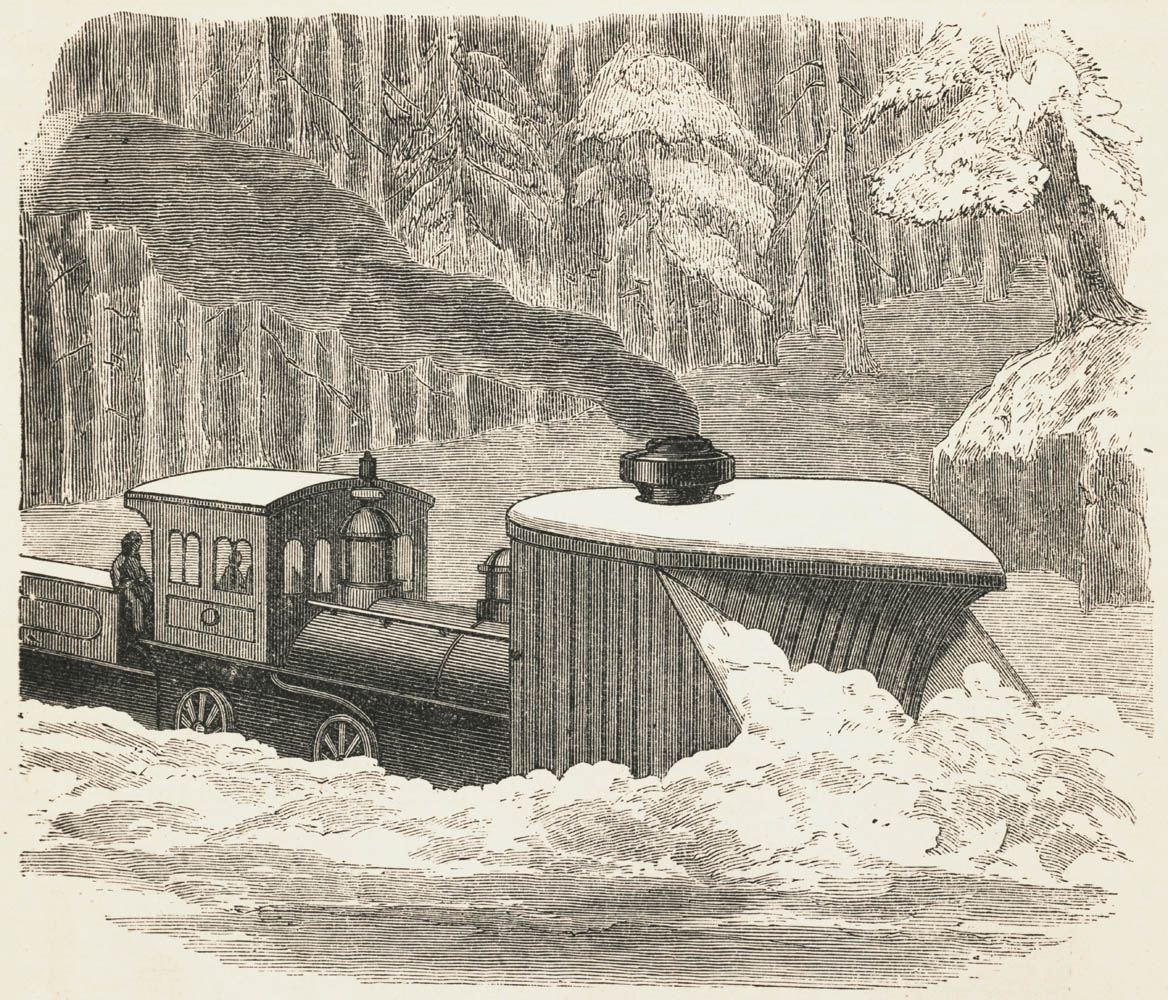

I had to become acquainted with not only the transcontinental railroad in general, but also with the route of the Central Pacific Railroad in particular and the use and detonation of dynamite, the building of snowsheds and trestles, labor relations associated with railroads and their workers, types of sabotage, the day-to-day functions of U.S. marshals, hotel registry books, wanted posters (Hollywood Westerns notwithstanding, few such posters actually included photographs of fugitives, I learned; usually, drawings were used, if there were any illustrations at all), and a host of other details.

I may have made a few mistakes (although I try hard to avoid doing so), but I'm confident that, if so, I made far fewer than I would have, had I not done my homework.


Keeping a database of useful sources and a gallery of usable photographs, diagrams (especially labeled ones), drawings, illustrations, and other sources of information about the Wild West can benefit an author in writing a whole series of novels. (It's educational and fun as well.)


Tuesday, September 17, 2019

Tombstone Entertainment: The Birdcage Theater

Copyright 2019 by Gary L. Pullman


One of the challenges faced by Billy Hutchinson and his wife Lottie, the owners of The Birdcage Theater in nineteenth-century Tombstone, Arizona, was how to make their business appealing to their customers, the region's miners, cowboys, and ranchers.
 

In 1881, before wedding Lottie, Billy had spent considerable money—$600—to build the theater. Now, he had to offer incentives to customers to keep them coming back for more. Fortunately, Billy had worked in show business, and he had the answer: “entertaining shows, refreshing drinks, games of chance, dancing, private conversation[,] and adult comfort.”

The eclectic “entertainment” offered by the theater wasn't exclusively theatrical. Prostitutes, who worked behind the drawn curtains of the “elevated boxes” suspended from the ceiling, also kept the establishment's patrons entertained at $25 per night. (Private rooms in the basement went for $40 per night.) 

Uncle Tom's Cabin was performed at The Birdcage in June 1882. Not all of the action went as written in the script:
Chaos occurred when little Eliza was being pursued by Simon Legree and his bloodhound while crossing the icy river. An inebriated cowboy, caught up in the drama, pulled his sixgun and plugged the dog. The audience was outraged and pounced on the clueless cowboy who was finally rescued by a peace officer and hauled off to jail. The next day the cowboy, now sober and repentant, offered his horse to the troupe as recompense for the dog.
In addition, The Birdcage Theater featured wrestling matches, one of which, between Peter Schumacher and Professor Dan Milo, occurred on February 6, 1886, each party receiving $100. Admission to the floor was 50 cents; for reserved seats, a dollar. The match was advertised in the town's famous newspaper, The Tombstone Epitaph, two days before the event took place.

The variety of entertainment that The Birdcage featured virtually guaranteed there was something for everyone, “including leg shows, bawdy humorists, and fast-paced variety acts.” The variety acts featured such performers as The Happy Hottentots and their “Grotesque Dancing, Leg Mania, and Contortion Feats”; Mademoiselle De Granville, “The Female Hercules,” who claimed to have “an iron jaw” and picked “up heavy objects with her teeth”; comedians, including “the Irish comic duo of John H. Burns and Matthew Trayers, the comic singer Irene Baker,” and comedienne Nola Forest; “a serious opera singer” Carrie Delmar; acrobats and trapeze artists; Ella Richter, aka Mademoiselle Zazel, “the Human Cannonball”; masquerade balls attended by transvestite entertainers David Walters and Will Curlew; and “The Flying Nymph,” who “flew” across the theater “on a rope.” 

The Human Fly was certainly “one of the most unusual” performances:

. . . women (dressed in the usual theatrical tights and abbreviated costumes) walked upside-down on the ceiling over the stage. It was not an illusion—they actually were suspended above the stage . . . . The trick was that their shoes had special clamps on them that fitted into holes bored into the ceiling to support them . . . . In another version the human fly” women wore suction cups on their feet as they walked up and down on a platform high above the stage.


As one might suppose, such acts were dangerous. In both versions, one or more of “the human fly” performers died when equipment failed.

Among the other unusual entertainments the theater boasted was a 24-hour poker game that continued non-stop for eight years, five months, and three days, during which $10 million were bet. To be admitted to the game, a player had to be willing to spend at least $1,000. Those who tried their hands at the game include Doc Holliday, Bat Masterson, Diamond Jim Brady, and George Hearst. The house took 10 percent of the winnings, so, over the years that the game lasted, The Birdcage received a whopping $1 million! 


Eddie Foy, Sr.
Lotta Crabtree

Among other entertainers who performed at The Birdcage were Eddie Foy, Sr., Lotta Crabtree, Lily Langtree, and Lola Montez. However, despite the entertainment the theater offered, the frequent shootings and low company prevented many women from patronizing the establishment, and, despite the weekly Ladies' Nights on which women were admitted free of charge, “respectable ladies in Tombstone never went near the Bird Cage.


Lillie Langtree
 
Lola Montez
The Birdcage Theater is something of a time capsule. Located at the corner of Allen Street and Sixth Street, it survived the devastating fire that swept through Tombstone in the early 1880s because it was built entirely of concrete, and, “when it closed its doors in 1889, everything inside was left in place”; in 1934, when the doors were opened again, “Tombstone found itself with a perfect window into its past.”


List o f 19th-Century U. S. Western Frontier Forts, Part VIII: Montana

Note : This is the eighth of a series of lists of the  U. S. forts of the Wild West. It is intended for use in research by writers, readers,...