Showing posts with label gunfighter. Show all posts

Tuesday, June 23, 2020

Tips on Researching the Old West

Copyright 2020 by Gary L. Pullman

Authors who write historical fiction learn—or should learn—about a lot of topics related to the times in which their novels are set. I thought that readers and other fans of the genre might enjoy learning how this writer approaches such research.


For example, in writing On the Track of Vengeance, the fourth novel in my series, An Adventure of the Old West, I had occasion to research a number of subjects, some of which I used in the story, others of which, for one reason or another, fell by the wayside:


In 1880, how much did a gold bar weigh, and what was it worth?

A gold bar weighed 400 troy ounces, or 27.4 pounds and, in 1880, was worth $18.94 per troy ounce.

Therefore, a 27.4-pound (400-troy-ounce) bar of gold would have been worth $7,576.


Besides six-gun and six-shooter, what synonyms were available, in 1880, for the word “revolver”?

A revolver was also sometimes called a “wheelgun.”

In what year did these terms come into use:

Derringer: 1850
Gunfight: 1889 (oops! Can't be used in a novel set in 1880!)
Gunfighter: 1889
Gunfire: 1801
Gunman: 1620s
Gunplay: 1891 (oops! Can't be used in a novel set in 1880!)
Gunshot: early 15th century
Gunslinger: 1916 (oops! Can't be used in a novel set in 1880!)
Handgun: 1930s (oops! Can't be used in a novel set in 1880!)
Shootist: 1864
Shotgun: 1821
Six-gun: 1912 (oops! Can't be used in a novel set in 1880!)
Wheelgun: ? (may be best not to use unless additional research uncovers first-use date)


In addition to ensuring that the words used in a novel were actually in use at the time the story is set, it's a good idea to verify one's understanding of these terms. For example, a pommel isn't the same as a saddle horn, but a spittoon (which came into general use in 1811) is the same as the cuspidor (which originated in 1779).


Click the image to enlarge it.

Where can I find a good map of the Central Pacific Railroad route?

I found an excellent digital copy of a superb map of this route, but, alas!, I am now unable to locate the map or the website.

Fortunately, I saved a copy, which is highly recommended. A list of websites' URLs, or addresses, is great—until one of the sites vanishes from the Internet forever. It's best to keep both a list of the addresses and a copy of each image you may want as a present or future reference.


Where might I locate accounts of the origins of numerous towns along the route of the Central Pacific Railroad route?

For brief histories of the towns along the railroad's route, I used Wikipedia, verifying the online encyclopedia's accounts with other, more reputable sources. When I found a town of particular interest, I did further, more involved research, often using Google Books, public or university libraries, and other databases.


To confirm my memories and to further my knowledge about horses, I consulted YouTube videos by contemporary, working cowboys, marksmen, trackers, and other experts. As a result, I learned a lot about how to lead a string of horses (or mules); how a Colt .45 single-action revolver looks when it fires; how to track fugitives; and a lot of other topics.

When it's necessary to know what a past dollar amount would be in today's dollars, US Inflation Calculator is an invaluable resource. I've used it to get an idea of the value of amounts posted on reward posters, for example, and to evaluate the modern equivalents of gold prices and daily purchases and wages during the times in which my novels are set (about 1865 to 1880 at present).


Facsimiles of Western newspapers are often helpful in researching a story, as are vintage maps. For a variety of other historical research materials, try Internet Archive.


I had to become acquainted with not only the transcontinental railroad in general, but also with the route of the Central Pacific Railroad in particular and the use and detonation of dynamite, the building of snowsheds and trestles, labor relations associated with railroads and their workers, types of sabotage, the day-to-day functions of U.S. marshals, hotel registry books, wanted posters (Hollywood Westerns notwithstanding, few such posters actually included photographs of fugitives, I learned; usually, drawings were used, if there were any illustrations at all), and a host of other details.

I may have made a few mistakes (although I try hard to avoid doing so), but I'm confident that, if so, I made far fewer than I would have, had I not done my homework.


Keeping a database of useful sources and a gallery of usable photographs, diagrams (especially labeled ones), drawings, illustrations, and other sources of information about the Wild West can benefit an author in writing a whole series of novels. (It's educational and fun as well.)


Tuesday, December 17, 2019

What's in a Movie Poster? Western Images, Themes, Qualities, Characters, and Values

Copyright 2019 by Gary L. Pullman
 
Western movies tend to do well at the box office, especially when their leading character is a star of the magnitude of John Wayne or Clint Eastwood.

How much do posters and lobby cards designed to promote these films help sell tickets? The answer is anybody's guess, but, apparently, even in the digital age, Hollywood believes that there is magic in such advertisements. Movie posters and lobby cards have long been staples of the promotion of movies of all genres, Westerns included. They remain so today.

Like movie posters that promote other genres, those that advertise Western films can pinpoint some of the features of such fare that screenwriters have found appeal to viewers. The same features, one might suppose, would also appeal to readers of Western novels.

Let's take a look at a Western movie poster, with an eye toward what, specifically, they advertise that's central to this genre.


The poster for Pale Rider, featuring Clint Eastwood, shows

  • a lone gunman fanning his Colt
  • a lone gunman who is dressed well by the standards of his time
  • seven men standing in a line
  • a block of buildings typical of Western towns
  • a caption, in small letters, at the heart of the sun-like circle to the right of Eastwood's head
  • the colors yellow, orange, red-orange, and reddish-brown
What can we infer from the images, design, colors, and text?
 
Typically, the Western hero is a solitary figure who's good with a gun and who is willing to risk his life to defend himself, another person, or his own values. He tends to be larger than life. The poster focuses on Eastwood's character, a lone gunman who is shown as a giant among men; the seven other figures shown in the poster are not only literally beneath him, but they are tiny in comparison, and, while he is shown in full color, they are little more than shadows. Next to him, the other men are insignificant, more like pesky gnats than worthy foes.

Not only is the lone gunman bigger than anyone else, but he is also central: he is shown near the center of the poster's focus. Thanks to his size, his facial features are easily discernible; he has an identity; he is an individual, a person with character. His weathered appearance, leathery skin, and sharp features mark him as an independent, hard-bitten man who's been around and knows the score. In his eyes, we see steely determination; his bared teeth show aggression. He is focused, intent, one with his gun. A man on a mission, he stands and delivers. These are the qualities of personality, the poster suggests, that are important to the audience for this actor's films. Moviegoers (or readers) who enjoy Westerns want a man who, even alone, will take a stand, risk his own life, and combat forces which would defy or destroy the principles he holds dear.

The lone gunman dresses better than many of his day, which suggests that he enjoys financial success. He may make his living by his gun. He may, in other words, be a gunfighter or a mercenary. (Those familiar with the “spaghetti Westerns” in which Eastwood starred will know, of course, that, in Pale Rider, he plays a bounty hunter).

The sun behind him isn't a halo exactly, or, if it is, it doesn't fit him precisely, but the effect is similar; the concentric circles of the high desert sun frame him closely enough to suggest that there may be more to him than meets the eye, even if he himself is not altogether holy.

The poster's colors are bright and vibrant, but the sun's brilliant yellow, by degrees, merges with the brown of the hero's coat and the sky, the element of air merging with the element of earth. Perhaps the lone gunman is a demigod, the Wild West's version of Hercules. Western fans want their heroes to be Heroes, to be writ large, to be of nearly supernatural dimensions.

The fact that the movie is set in the West is presented almost as an afterthought. The stretch of low buildings with false fronts and the line of small figures in Western garb are more like quick sketches that suggest, rather than depict, the setting. It is clear that the film is not so much about the West itself as it is about this one individual, the lone gunman who stands out.

White adds touches of sunlight to the brim of the gunman's hat (which is not a Stetson; this man is a gunman, but he's no cowboy). White also highlights his left cheek, the top of his shirt, the cuffs of his shirt sleeves, and the handle and the cylinder of his second gun, the Colt stuffed in his gun belt, a phallus not quite hidden and ready to hand, doubling his manhood.


In the yellow circle of the sun, the poster's caption, in small letters, whispers part of a verse in the book of Revelations: “. . . and hell followed with him,” suggesting the consequences of the Pale Rider's visit and connecting him to a figure of the Biblical apocalypse: “And I looked, and behold a pale horse: and his name that sat on him was Death, and Hell followed with him.” If there was any doubt as to the lone gunman's identity, the caption spells it out: the Pale Rider is, in fact, Death personified.
 
Without seeing the movie itself, these suggestions are all the poster's viewer has by which to decide whether to see the film. According to Box Office Mojo, Pale Rider grossed over $41 million, a fourth of this amount during its opening. Although other factors contributed to the film's success, it seems that potential viewers liked what the poster showed them. If they were attracted by the themes, the type of hero, and the character traits suggested by this poster, it's likely that they would be drawn to similar themes, heroes, and character traits in Western novels as well.


Monday, December 2, 2019

Wild Bill Hickok's Wild Bear Story

Copyright 2019 by Gary L. Pullman


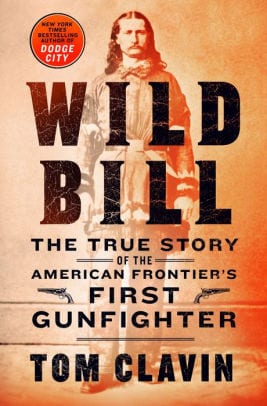
In Wild Bill, his biography of Wild Bill Hickok, Tom Clavin relates an anecdote about Hickok's alleged encounter with a cinnamon bear.


Wild Bill Hickok

According to Clavin, the story probably happened, although “a few researchers have disputed that the encounter” between Hickok and the bear “ever took place” (38).

It seems that the gunfighter was working as a teamster when “he found a bear blocking the road,” whereupon he climbed off his wagon “and shot her in the head.” The gunshot didn't do anything but anger the mother bear, causing her to attack, "crushing Hickok against her” (38).


He responded by shooting her in the paw, after which the bear locked onto his left arm and began to bite; Hickok jerked his Bowie knife from his belt and slashed "the bear's throat” (38).

Somehow, Hickok managed to drive his “freight wagon to the next town,” despite his extraordinary pain, and the local sawbones treated his patient “for broken bones in Hickok's chest, shoulder, and arm” (38).


Clavin mentions a film that features a bear attack: The Revenant, starring Leonardo DiCaprio (37). (Another movie, set in Canada, that features a horrific bear attack is Backcountry.)


Friday, November 1, 2019

Jim Levy (Leavy): At The End of a Trail of Violence

Copyright 2019 by Gary L. Pullman


Pioche, Nevada, 1885

Abilene. Cripple Creek. Deadwood. Dodge City. Tombstone. There are towns with more famous names than that of Pioche, Nevada, but historians have verified that Pioche was as rough and tough as any other town in America's Wild West.

Although Pioche's Jim Levy (also spelled Leavy) wasn't as famous as Wild Bill Hickok, Wyatt Earp, Bat Masterson, or Doc Holliday, he did develop a reputation as a man who was skilled with a six-gun and someone it was dangerous to cross, and Wyatt Earp and Bat Masterson considered him a skilled gunfighter.

He started his career as a gunfighter in hope of inheriting $5,000. In a gunfight with fellow miner Mike Casey, Thomas Gosson (also spelled Gasson) was fatally wounded. His dying proclamation was to will $5,000 to anybody who killed Casey.


Pioche, Nevada

In the 1871 gunfight that occurred between Casey and Levy, in front of Freudenthals' General Store, Levy wounded his adversary, putting Casey out of his misery by pistol-whipping him, an act that earned Levy both a pistol shot to the jaw from one of the dead man's friends and the money Gossan had bequeathed to Casey's killer.

In Pioche, in January 1873, Levy was also involved in another duel to the death, this time against Thomas Ryan. Due to a lack of evidence needed to prosecute Levy for murder, the gunfighter was released. Sometime during the next two years, he left Pioche.


On March 9, 1877, in Cheyenne, Wyoming, Levy became involved in yet another gunfight, this time against Charlie Harrison. Like Levy, Harrison had a history of violence, having killed several of foes. Insults Harrison made about the Irish during a card game in which Levy was also a player infuriated the Nevada gunfighter, and the men agreed to settle their score outside. They later faced off in front of Frenchy's Saloon.

Although Harrison got off the first shot—or the first few shots—his aim was inaccurate. Levy's was not, and he shot Harrison in the chest. To finish the job, Levy approached his fallen foe and shot him again. Witnesses took umbrage at this second, needless exhibition of Levy's skill, but he was never prosecuted for killing Harrison.


Tucson, Arizona

In Tucson, Arizona, Levy came to the end of his trail. This time, his dispute was with John Murphy, who was dealing cards in a faro game at the Fashion Saloon. The men agreed to settle their differences in a gunfight the next morning. 

Instead, Murphy and his friends, Bill Moyer and Dave Gibson, encountering Levy just after midnight as he approached the Palace Saloon's front door, opened fire on Levy, assuming the gunfighter was armed.

Levy believed the shots had been fired from within the saloon and fled outside—a mistake that cost him his life, when he ran straight into his enemies' gunfire. Although Murphy, Moyer, and Gibson were arrested and held in jail for killing an unarmed man, they escaped, and Murphy and Gibson evaded capture. Moyer was arrested and sentenced to life in prison.


Thursday, October 3, 2019

Using Generic Incidents to Plot Your Western Novel (or Fiction of Any Other Genre): Part 2

Copyright 2019 by Gary L. Pullman


In Part 1 of this series, I explained how I strip the particular incidents of a plots to the bone, transforming them into generic expressions of action similar to the narrative motifs, or functions or dramatic personae, identified by Vladimir Propp in Morphology of the Folktale.

By doing so, I have developed a good size list of the types of incidents (and, indeed, their relationships to one another) that typically occur in Western movies (or novels).

The same technique, of course, can be applied to any other genre as well, providing similar indices of motifs for any type of fiction from action-adventure thrillers to science fiction or young adult novels.


In addition to the generic incidents I compiled on the basis of James L. Neibaur's summary of A Fistful of Dollars, I added additional generic incidents his summaries of other plots of Clint Eastwood's Westerns.

Neibaur's summary of A Fistful of Dollars (1964) disclose these generic incidents:

  • The hero proves his worth.
  • The hero is hired to join a gang.
  • The hero plays two rival gangs against one another.
  • While the gangs fight each other, the hero seeks to benefit himself at their expense.
  • The hero commits an act that makes him somewhat sympathetic but does not make him less mysterious.
  • To avenge and protect his injured friends or supporters, the hero tricks the villain and kills him.

These generic incidents are based on Neibaur's summary of A Few Dollars More.
  • A hero's rival acts.
  • A hero acts.
  • A hero's rival acts again.
  • A hero's rival and a hero exhibit their respective skills, trying to intimidate one another, but, instead, impress each other and join forces against a common enemy.
  • To carry out their plan, a hero's rival and a hero split up.
  • The plan of a hero's rival and a hero's unites them after they earlier separated.
  • A hero's rival and a hero attempt to double cross a villain, but they are discovered and captured.
  • A hero's rival and a hero are released by a member of a villain's gang so the gang can hunt them down and kill them.
  • A villain plans to double cross his gang, but a member of the gang figures out the villain's plan and partners with the villain.
  • A hero's rival and a hero kill off a gang, one by one.
  • A villain gains the upper hand against a hero's rival.
  • A hero intervenes, restoring the balance of power between a hero's rival and a villain.
  • A hero's rival kills a villain.
  • A hero's rival reveals a secret, telling a hero what motivated the rival to hunt down and kill a villain.
  • A hero's rival rewards a hero.
  • A hero eliminates a final threat.


These generic incidents are derived from Neibaur's summary of Hang 'Em High.
  • An innocent man runs afoul of the law.
  • An innocent man is punished.
  • A lawman rescues an innocent man, but takes him into custody and presents him to a judge.
  • An innocent man is found to be innocent.
  • An innocent man receives the means to avenge himself.
  • An innocent man kills one of the men who unfairly punished him.
  • An innocent man receives information about his other persecutors' whereabouts.
  • An innocent man arrests a second persecutor.
  • An innocent man teams up with a sheriff.
  • An innocent man and a sheriff arrest three more of the innocent man's persecutors.
  • An innocent man defends two of his persecutors in court, because they had no part in punishing him, but to no avail; they are sentenced to be executed.
  • An innocent man is paid money that is due to him.
  • Two of the innocent man's persecutors flee, but three others conspire to kill the innocent man who now also hunts them.
  • Three men ambush and attack an innocent man.
  • Injured, an innocent man survives; he is nursed back to health by a woman for whom he develops feelings.
  • An innocent man shoots it out with two men who attacked him earlier, killing them; the third attacker kills himself.
  • An innocent man rides out of town, seeking the two remaining men who persecuted him.

These generic incidents are extracted from Neibaur's plot summary of Two Mules for Sister Sara (1970):
  • A villain is violent toward an innocent woman.
  • In an unexpected way, a hero responds to a violent act against an innocent woman.
  • A villain flees; a hero shoots him.
  • Both a female victim of violence and a hero support a revolutionary force or cause.
  • A female victim of violence poses as a person different from herself, a pose which alters a hero's behavior.
  • A hero is attracted to a female victim of violence posing as someone other than herself.
  • A hero acts in such a way as to protect and impress a female victim of violence posing as someone else.
  • A hero is wounded as he supports a revolutionary cause.
  • A female victim of violence follows a hero's instructions, removing a bullet from the wounded hero.
  • A female victim of violence posing as someone else discloses her true identity.
  • A hero fights alongside a revolutionary force.
  • A hero is rewarded.
  • A hero and female a victim of violence ride off together.


These generic incidents make up the plot structure of Joe Kidd (1972):
  • A young man is in jail with two older Mexican men who disparage him.
  • A jailed young man assaults one of the two heckling Mexican men who share his jail cell.
  • A judge fines a young man for poaching; when the young man is unable to pay the fine, he is jailed for several days.
  • Several Mexican men storm a courtroom, holding the judge at gunpoint while they complain that their land has been stolen, but their proof has been destroyed.
  • A young man helps a judge to escape from men who hold him hostage in his own courtroom.
  • A wealthy landowner forms a posse to capture the leader of a group of Mexican men.
  • A Mexican leader bails a young man out of jail and invites him to join his band, but the young man declines.
  • After a Mexican leader raids a young man's ranch, he joins a wealthy landowner's posse.
  • When a wealthy landowner holds Mexican villagers hostage until a Mexican leader surrenders himself, a young man who just joined the landowner's posse saves the hostages and leaves the posse to capture the Mexican leader by himself.
  • A young man returns to town with a captured Mexican fugitive, only to find a wealthy landowner and his posse waiting to kill his captive.
  • A young man kills the members of a corrupt posse.
  • In a one-on-one duel, a young man kills a wealthy landowner who led a corrupt posse.

These generic incidents are extracted from Neibaur's summary of The Outlaw Josie Wales (1976):
  • A man's family is murdered.
  • A man seeks revenge.
  • A man joins a group of other men.
  • A man kills to protect a group of which he is a member.
  • A man teams up with one of the survivors of a group of which he was a member.
  • A man seeks vengeance by himself.
  • A reward is put on a man's head; bounty hunters pursue him.
  • A man gathers a diverse group of people.
  • A group overpowers an adversarial group.
  • A man attacks another man.
  • A man attacking another man is himself killed with his own weapon.
  • A man rescues a woman from a gang of would-be rapists.
  • A man rescues women from a physical attack by a group.
  • A man passes on the chance to fight his chief adversary after the adversary has been seriously wounded.
In listing these generic incidents, I separated them by movie to show how such incidents have been structured to generate plots for complete stories (i. e., films). However, there's no reason generic incidents cannot be mixed and matched, as long as doing so doesn't disrupt or destroy the narrative continuity of the selected incidents.


These generic incidents are derived from Neibaur's summary of Unforgiven (1992):
  • Men commit a despicable act against a woman.
  • A sheriff is lenient in dealing with men who commit a despicable act against a woman.
  • A reward is offered for killing men who commit a despicable act against a woman.
  • A young man plans to collect a reward offered for killing two men who committed a despicable act against a woman.
  • A young man seeks to recruit an older man to help him to kill two men for whom a reward is offered.
  • An old man, having no interest in helping a young man kill two wanted men for half the reward offered for their deaths, refuses to partner with the young man.
  • An old man who'd refused to partner with a younger man changes his mind and agrees to help him track and kill two wanted men in exchange for half the reward for their deaths.
  • A sheriff and his deputies beat an old man and throw him out of a business establishment.
  • A young man and an old man's former partner nurse the old man back to health after he has been brutally beaten.
  • A group of men find one of the wanted men they are hunting.
  • A group of men ambush another group of men, killing one of the latter's members.
  • A young man finds the second of two wanted men whom he and his partner are hunting, and he kills their quarry.
  • A young man and his older partner escape the wrath of a group of men, one of whose members he young man earlier killed.
  • Distraught over having killed a man, a young man dissolves his partnership with an older man and leaves.
  • An old man learns that his former partner was killed and that his former partner's corpse is on display in a coffin on a town street.
  • An old man instructs his former partner, a young man, to deliver his original (past) partner's share of a reward to his widow and to deliver the old man's own share to his children.
  • An old man avenges his murdered former partner.
  • As a sheriff forms a posse, an old man kills the sheriff's recruits.
  • An old man kills a sheriff.
  • An old man returns to his children.
  • Having been paid his share of a reward, an old man relocates to a new part of the country, where better opportunities await him.
In listing these generic incidents, I separated them by movie to show how such incidents have been structured to generate plots for complete stories (i. e., films). However, there's no reason generic incidents cannot be mixed and matched, as long as doing so doesn't disrupt or destroy the narrative continuity of the selected incidents.

Friday, September 27, 2019

Another Great (But Dated) Source for Fans, Readers, and Writers of Westerns

The Encyclopedia of Western Gunfighters by Bill O'Neal provides a wealth of information concerning (among many others—the book includes 587 of them!) Robert A. Clay Allison, Deputy U. S. Marshal Samuel Bass, William Morton Breckenridge, William F. (“Billy the Kid”) Clairborne, Joseph Isaac (“Ike”) Clanton, Florentine Cruz, George (“Big Nose”) Curry, Bob Dalton, Emmett Dalton, Grattan (“Grat”) Dalton, Morgan Earp, Virgil Earp, Warren Earp, Wyatt Berry Strapp Earp, Robert Ford, Patrick Floyd Garrett, William (“Curly Bill”) Brocius, John Wesley Hardin, James Butler (“Wild Bill”) Hickok, John Henry (“Doc”) Holliday, Thomas (“Black Jack”) Ketchum, Nashville Franklin (“Buckskin Frank”) Leslie,” Harvey (“Kid Curry”) Logan, Frank McLaury, Thomas McLaury, Sherman McMasters, Edward J. Masterson, James P. Masterson, William Barclay (“Bat”) Masterson, Dave H. (“Mysterious Dave”) Mather, “Johnny Behind the Deuce” O'Rourke, Commodore Perry Owens, Robert LeRoy (“Butch” Cassidy”) Parker, William F. (“Little Bill”) Raidler, John Ringo, David Rudabaugh, Thomas J. (“Bear River Tom”) Smith, Henry (“The Bearcat) Starr, Frank C. Stilwell, Ben Thompson, James Younger, John Younger, Robert Younger, and Thomas Coleman Younger.

Although dated (it debuted in 1940), this volume, published by the University of Oklahoma Press, offers a treasure trove of information for readers and writers alike. Not the least of this information are the photographs of the gunfighters: there are nearly sixty of them.


In his “Introduction,” O'Neal discusses the difficulties of defining the term “gunfighter” and in determining which criteria should be used to identify them.

In the process, he disabuses his readers of some of the myths, or mistaken beliefs, that have collected about Western gunfighters, often as a result of their glamorization.

For example, O'Neal says, “The primary misconception . . . concerns the fast draw” (3). In fact, “the speed of the draw was insignificant” (4). The technique of fanning a gun's hammer was never used, because “a snap shot rarely hits anything but the ground or the sky” (4). 

Furthermore, O'Neal observes, “gunfighters frequently did not even carry their weapons in holsters. Pistols were shoved into hip pockets, waistbands, or coat pockets and a rifle or shotgun was almost always preferred over a handgun” (3).

Another false belief among many fans of Westerns is that gunfighters were serial killers, most having many victims to their credit. In reality, O'Neal points out, “most gunfighters killed but few men during their careers” (4). According to O'Neal's estimates, Masterson killed only one man; Billy the Kid, perhaps four; and Clay Allison, no more than a dozen (4).

Gunfighters, O'Neal found, fought for and against the law, often earned their living in professions requiring skill with a gun, such as “a law officer, detective, buffalo hunter, or army scout, or a rustler, thief, or hired killer.” In addition, some “men became gunfighters by accident” (4).

As a result of his research, O'Neal decided, “with some exceptions” and “somewhat arbitrarily,” that, for his purposes, a gunfighter had to have “been involved in at least two verifiable shootouts—usually but not necessarily fatal ones” between 1861 to 1900 (4).

His “Introduction” also includes a list of the 33 deadliest, or “greatest,” gunfighters. Here, I include only the top ten. (The number in parentheses after the gunfighter's name represents the number of men he's known to have killed.) The list may surprise some readers:


Jim Miller
  1. Jim Miller (12)
  2. Wes Hardin (11)
  3. Bill Longley (11)
  4. Harvey Logan (9)
  5. Wild Bill Hickok (7)
  6. John Selman (6)
  7. Dallas Stoudenmire (5)
  8. Cullen Baker (5)
  9. King Fisher (5)
  10. Billy the Kid (4)

Wild Bill Hickok

In the case of a tie in regard to the number of gunfighters' victims, it's unclear how O'Neal ranked the killers. He includes the numbers of gunfights in which the gunfighters were involved, but he doesn't use this additional information to rank the men.

For example Wes Hardin (i. e., John Wesley Hardin) was involved in 19 gunfights, during which he killed 11 men, which equals a kill ratio of 57.8%: 11/19 = 57.8), but Bill Longley participated in 12 gunfights, killing 11 of his opponents, which equals a much higher kill ratio than that of Hardin: 11/12 = 91.6, or 91.6%. Why, then, is Hardin ranked above Longley?


Wyatt Earp

Wyatt Earp, who was a participant in five shootouts, occupies the next-to-lowest (32nd) place on O'Neal's list of the “greatest gunfighters” (6), because he killed no one (although Earp took credit for killing Billy Clairborne, is said to have killed Curly Bill Brocious, and may have killed Frank Stilwell and others during his vendetta ride). 

Doc Holliday, killed two men in eight shootouts (a 25% kill ratio), but is ranked in 19th place, just ahead of Pat Garrett, Billy the Kid's killer. The list is obviously controversial, but it does give fans, readers, and writers of Westerns some data upon which to reflect and about which to debate.


The Hanging of Black Jack Ketchum

O'Neal's research also allows him to draw a few more conclusions regarding gunfighters. Most were born and died in Western states. A third died peacefully, the others violently, by gunshot, lynching, or suicide. On the average, their lifespan was 47 years.

Gunfighters earned their living in a variety of ways, often devoting themselves to several careers at different times over the years: law enforcement (110 of O'Neal's 587 gunfighters were lawmen at one time or another), cowboys (75 of 587), ranchers (54 of 587), farmers (46 of 587), rustlers (45 of 587), hired gunmen (35 of 587), soldiers (34 of 587), bandits (26 of 587), gamblers (24 of 587), laborer (22 of 587), saloon owner (19 of 587), clerks (14 of 587), train robbers (14 of 587), miners (10 of 587), and/or prospectors (10 of 587) (8).

Other professions in which gunfighters earned a living at one time or another are in the single digits. Nine out of the 587 gunfighters were army scouts, stagecoach robbers, or teamsters (8).

Eight were bank robbers or buffalo hunters. Seven were range detectives or stagecoach drivers (8).

Six were actors, ranch foremen, or railroad employees (8).

Five were bartenders or bronco busters (8).

Four were butchers, freighters, livery-stable owners, or criminals (8).

Three were bounty hunters, cafe owners, carpenters, hotel owners, lawyers, politicians, private detectives, racketeers, sportsmen, or whiskey peddlers (8).

Two were con men, counterfeiters, customs collectors, dance-hall owners, dispatch riders, horse breeders, hunters, printers, school teachers, speculators, or surveyors (8).

One was an arsonist, an author, a baker, a blacksmith, a building contractor, a businessman, a cattle broker, a dentist, a doctor, an engineer, an express-company superintendent, a ferryman, a gunsmith, a harness maker, an Indian agent, an Indian fighter, an inspector, an insurance executive, an inventor, an irrigation manager, a jailer, a jeweler, a lecturer, a livery-stable employee, a movie producer, a movie scenarist, a newsboy, an oil wildcatter, a packmaster, a page, a postmaster, a prison warden, a racetrack employee, a railroad guard, a realtor, a sailor, a salesman, a school superintendent, a sheepherder, a shotgun guard, a showman, a slave trader, a spy, a stagecoach contractor, a stage-station employee, a telegraph runner, a tinsmith, a trail boss, a train brakeman, a trapper, a wheelwright, a whiskey smuggler, a Wild West show performer, and/or a woodcutter (8-9).


Bob and Grat Dalton

As O'Neal points out, a number of gunfighters were also brothers, brothers-in-law, cousins, nephews, parents and children, in-laws, or other relatives of shootists.

Brothers were often involved in gun play as a team: the Beckwiths, the Clantons, the Daltons, the Earps, the Horrrells, the Jameses, the Logans, the Mastersons, the McCluskies, the McLaurys, the Olingers, the Tewksburys, the Thompsons, and the Youngers, among them (9).

Most gunfights between 1861 and 1900 occurred in Texas (160), but Kansas and New Mexico (each with 70 gunfights to its credit) were not far behind, and all the Western states were prone to such violence, O'Neal observes (10).

O'Neal's “Chronology of the Gunfighters' West,” another intriguing table in his “Introduction,” offers brief (usually a sentence) accounts of the gunfights his encyclopedia treats in detail in the articles that follow (10-14). The first summary indicates the nature of the others:

1861    Shootout between the “McCanles Gang” and Wild Bill Hickok (July 12, Rock Creek Station, Nebraska).


Bear River Tom

Nicknames were plentiful among Western gunfighters, O'Neal says, many deriving from “physical characteristics and appearance” (Cockeyed Frank Loving); from “personality traits” (Mysterious Dave Mather); from “locations” (Bear River Tom); or from “occupational tendencies” (Doc Holliday) (14-16).

Following his “Introduction,” O'Neal begins his profusely illustrated accounts of the 587 gunfighters whose stories make up his encyclopedia.

All in all, it's a fascinating, rich treasury of facts and lore concerning one of the most intriguing groups of men to have inhabited America's nineteenth-century Wild West.


List o f 19th-Century U. S. Western Frontier Forts, Part VIII: Montana

Note : This is the eighth of a series of lists of the  U. S. forts of the Wild West. It is intended for use in research by writers, readers,...