Showing posts with label newspaper. Show all posts

Friday, November 20, 2020

Light Verse and Worse: A Wild West Newspaper's Extravagant Fillers


Copyright 2020 by Gary L. Pullman

Like the frontier itself, the newspapers of the Wild West weren't all that tame. Whether the content was news, entertainment, or even advertisements, the material was apt to be intriguing. Sometimes sensational, occasionally humorous, and, more often than not, a bit tongue in cheek, the newspapers' stories, like its promotional copy, were welcome in prairie towns, on the high plains, and in wilderness locations far from home or, for that matter, civilization itself.


Newspapers allowed men and women on the frontier to keep abreast of what was happening in the rest of the country and enabled them to receive goods they couldn't always easily find in their own communities, if at all.

A survey of even one newspaper of the wild West shows fairly well what the others of its kind printed for its eager readers and, in our own day, offers us a glimpse of the life and times of the men and women who braved life on the edge of American civilization. Occasionally, the advertisements especially show the more devious side of human nature as well, just as the humor pokes fun at the absurdities or personal and social behavior.

The January 19, 1895, issue of The Courier, a newspaper that provided more entertainment than news, it appears, bore, among its other sundry contents, George Moss's light verse, “A Half-back from Wayback,” concerning a dude lately arrived on the Western frontier. The tenderfoot in question is “a young Yale graduate” who has taken the suggestion, attributed, by Josiah Bushnell Grinnell, its alleged recipient, to famed newspaper editor Horace Greeley, and gone West—in fashionable dress, yet:


He was a young Yale graduate

And he hied him to the west.

Oblivious of fear or fate

And fashionably dressed.


He ends up in Santa Fe, at “Dutchy's restaurant,” where he catches the eye (or eyes) of several frontiersmen who, each independently of the other, but unanimously, decide the newcomer “must go”:


He landed out a Santa Fe

And captured the town by storm,

Though naught he said, or didn't say

But chiefly because of his form.


On night in Dutchy's restaurant

Assembled a famous crowd:

Shanks, Deep Gulch Mike and Sandy Grant;

Red Thompson and Aleck Dowd.


A lawyer chap they called the Judge,

And Billings of Navajo;

Each pledged the other in Dutchy's budge

That the tenderfoot must go.


When the dude refuses “big Aleck Dowd's offer to have a drink with him, Dowd jerks his gun, demanding that the Easterner change his mind; instead, the tenderfoot disarms Dowd, breaking both the gunman's arm and the mirror into which the rowdy's liberated pistol flies:


Then Dowd, advancing, pulled his gun

And remarked in sneering tones:

You'll take a drink, or they'll be fun,

Likewise some blood and groans.”


And sudden as the lightning's flash

Our youth worked the elbow charm;

The pistol flew through the mirror, crash!

And Dowd had a broken arm.


One of the others, Shank, by name, next flings himself upon the newcomer and is tackled for his trouble, while the intended victim's knee causes a third attacker, Billings to throw “up blood.” Apparently, the dandy fells Deep Gulch Mike, who splits his head open “on a stone spittoon.” Sandy Grant is knocked out, and Red Thompson, now thoroughly unnerved, beats a hasty retreat. Only the lawyer among the attackers is left, but the tenderfoot soon dispatches him, too, tossing the attorney over the restaurant's bar.

Amazed, Pete, the bartender, asks his guest how he managed to defeat seven of the West's worst scoundrels. If the poem's title hasn't given away the punchline, the student's reply makes clear the incident's “snapper”: “They were easy meat/ I've played on our football team.”

Wild though it may be, the West, it seems, is no match for a Yale Tiger!


The Courier itself, which was “published every Saturday” in Lincoln, Nebraska, offered itself at the rates of $2.00 per year, $1.00 for six months, 50 cents for three months, 20 cents for a month, or five cent per single copy, promising subscribers that only “a limited number of advertisements will be inserted.” The copy posted by The Library of Congress on its Chronicling America website doesn't bear out the veracity of the vow: five of the issue's twenty pages, or twenty-five percent of the publication, contain advertisements.


The advertisements, which might not have been of great interest, in their day, to the newspaper's readers, are more intriguing today, perhaps, now that time has put some distance between the wild and woolly West of yesteryear and the high-tech times in which we live our lives at present. The grocers Hotaling & Son make it clear that they cater to “family trade only,” as a consequence of which “their goods are the nicest and freshest in the market,” suggesting that, were they to deal also with commercial trade, their sundries might not be quite as nice or fresh.


Likewise, the Merchant's Hotel in Omaha pays “special attention to state trade, guest and commercial travelers.” The rest, we guess, can go to hell.


Presumably, Drs. Starkey & Palen, who offer to heal the sick and make strong the weak, have themselves been “sick or debilitated,” because, it is from their “own experience of twenty-five years” that they know that their Compound Oxygen is not just another dubious remedy, but one that actually works, and, to prove it, they offer a two-hundred page volume that details, with “numerous testimonials,” the efficacy of Compound Oxygen, not of its cures, mind you, but of its “cues” of no end of complaints, including “asthma, beonchitis [whatever that may be], consumption, catarrh, rheumatism, nervous prostration, neuralgia,” and whatnot. The physicians conclude their advertisement with a cautionary statement, urging readers to avoid fraudulent imitations and “disappointment and loss of money, as there is but one genuine Compound Oxygen.”


If a reader would rather have something perhaps a little stronger than Compound Oxygen, a neighboring advertisement recommends Old Elk Bourbon, which, perhaps, unlike some of its competitors' whiskey, is shipped pure and unadulterated direct from the distillery,” presumably to prevent any middlemen from introducing impurities or other adulteration. Not just one or a few, but “the medical fraternity everywhere,” wherever that may be, has endorsed Old Elk as a life-giving elixir that gives, if not a cure, “life, strength and happiness to the weak, sick, aged and infirm.” The bourbon should, but may not, be available at either the pharmacy or one's local “liquor dealers”; if not, no matter: it can be obtained from the distilleries themselves. For $1.50. in advance, Stoll, Vannatta & Co. Distillers, will ship “a quart sample bottle” anywhere by prepaid express mail.


On another page in the same issue, Dr. Price offers his Cream Baking Powder with the advisory that it alone is the world's “only pure Cream of Tartar Powder,” and, as such contains neither ammonia nor alum. No wonder it's been “used in millions of homes” and has been “40 years the standard”!


There's also good news, disguised, as it were, as another advertisement, in the form of a testimonial by James W. Goss, a likeness of the gentleman accompanying his statement, in the off-chance that no one has ever heard of him. “Gentlemen—I was pronounced by my home physician [name withheld] as having tuberculosis, and I went South [odd: Doc Holliday's physician recommended the West] without any apparent benefit.” The Southern climate, it appears, was unable to cure him of tuberculosis, but, glory be!, he found a remedy, not in climate, but in Shiloh's Consumption Cure, “and it's results have been wonderful!” One might even venture, without exaggeration, perhaps, to say miraculous. Is there any doubt, any at all, that the good Mr. Goss would “cheerfully recommend it to any one suffering from lung trouble”? The recommendation of this astounding cure alone is worth any number of years' subscriptions to The Courier!


The last page of the issue flanks a center column of amusing anecdotes with advertisements extolling the virtues of various snake oil products, one of which advertisements, for Ayers Sarsaparilla, states that it strengthened a ten-year-old boy (who “declines to give his name to the public,” most likely because he exists only in the mind of the copywriter who created him). The cure came in the proverbial nick of time, as the youngster had been told that he was too weak ever to walk and was, indeed, certain to die. Death might have been the least of the horrors his disease would visit upon him, the child suggests. A “gathering,” he says, “formed and broke under my arm.” (He doesn't say what, exactly, the “gathering” was, but it sounds ominous.) When he “hurt his finger,” he testifies, the digit somehow “gathered and threw out pieces of bone,” a complication which also sounds nothing short of dire. The consumption, which had killed the unfortunate's “mamma” when he was but “one year old” wasn't through with him yet, for, if he broke his skin, the injury “was sure to become a running sore.” In vain, he took “lots of medicine,” but it wasn't until he tried Ayers Sarsaparilla that he found a cure. “It has made me well and strong,” the child declares, and Dr. J. C. Ayer & Co. of Lowell, Mass., assures their prospective patients that the sarsaparilla that “cures others, will cure you.”


Another advertisement reveals a miracle cure at least as astounding and wonderful as that of Ayer's Sarsaparilla. “Dr. W. Queen, “The Specialist,” portrait included, all but guarantees The Courier's readers that his “scientific treatment and removal [of cancers] in twenty minutes without knife, pain or loss of a drop of blood” cures “Piles and Tumors . . . Catarrh Throat, Lungs, Heart and Nervous disability” as well as “diseases of the Stomach, Kidney, Liver, Blood, and Disease of Women,” which have been the good doctor's “specialty for thirty-five years.” He has also “restored hearing to the deaf and sight to the blind,” but there is no mention of his having raised the dead back to life. His secret seems to be electrical current, because he describes himself as “Dr. Queen, the Electrician” and practices his—well, whatever it is—in his “Institute and Electric Bath Rooms” in downtown Lincoln.


One advertisement, by F. J. Chenney & Co. of Toledo, Ohio, even goes so far as to offer $100 “reward” to anyone their product, Hall's Catarrh Cure, “fails to cure” and invites readers to “send for list of Testimonials.”
 

With such extravagant claims as these advertisements proclaim, it is little wonder that the humorous quips and anecdotes listed between them fail to compete. One such item, “Uncertain,” for example, courtesy of the Detroit Tribune reads:


They stood still and looked at her.

“Do you not,” they asked, “want to be a lady when you grow up?”

Their child gazed into their face wonderingly.

“Forsooth,” she answered, brushing the tangled curls away from her sad, sweet face. “The way styles are going I know not what to say.”

No, she would not commit herself in advance to the fashions.


Cute? To be sure. Sweet? Undoubtedly. But how can even so precious and dulcet a vignette as this vie with the melodramatic and sensational accounts of miracles that hem it in on both sides?

 

Tuesday, September 1, 2020

Humorous Columns of Frontier Newspapers: Part 3

Copyright 2020 by Gary L. Pullman
 
Wild West newspapers, it seems, were fond of philosophizing about the causes and effects of humor, but they also offered samples of the merchandise.

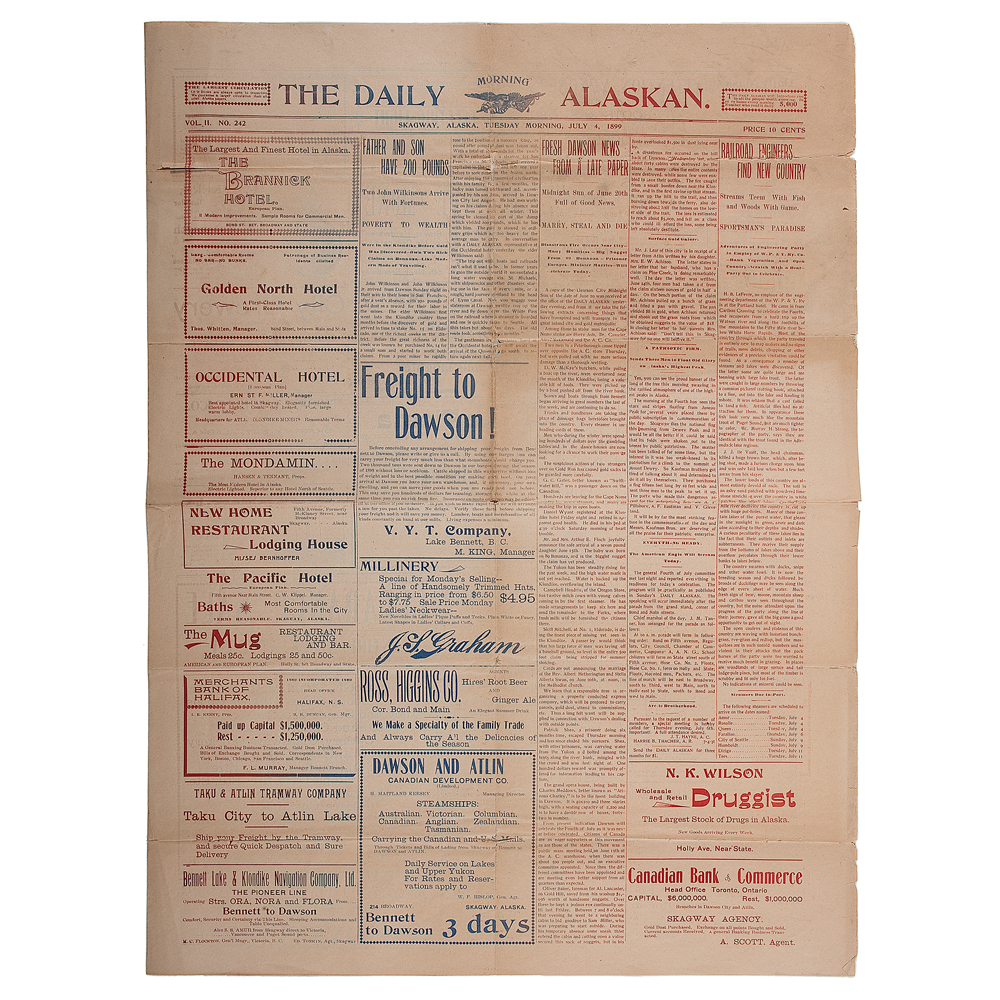
Sometimes, the samples themselves rely upon reasoning—or, rather, errors in the exercise of that faculty. The January 19, 1900, edition of The Daily Morning Alaskan column “Humor of the Hour” offers its readers these choice morsels, borrowed form their original sources.


The first anecdote is based upon jumping to a conclusion; the second involves a mistaken inference; and the third relies upon the fallacy of begging the question (and early twentieth-century sexism).

Untitled

Of course she was indignant when it dawned on her that some one was trying to flirt with her. Yet there was no denying the man behind her had kept steadily after her since she had left the street car.

And old enough to be in better business,” she said to herself indignantly. “I'll cross the street just to make sure whether he is really following.”

She crossed the street, and so did he. Then she turned on him.

Sir,” she said, “why do you persist in following me?”

He started, as if disturbed in the midst of some abstruse mental calculation, and for a minute seemed to be bewildered. Then he bowed courteously and said:

Madam, why do you persist in preceding me?”

Two doors farther on, he turned in, producing a latchkey as he did so and showing in other ways that he had reached his destination. She turned back and went around the block rather than pass that house, and her face was still red when she reached home. —Chicago Post


Making It Right

Madam,” said the leader of The Best Citizens' league, I have come to inform you that we just lynched your husband by mistake.

The bereaved woman covered her face with her hands and began to moan.

There, there,” the best citizen went on, “don't cry. We expect to get the right man before night.” —Chicago News


Couldn't Believe It

Do you see that girl with the fluffy brown hair over there?”

The one with the pink roses in her bodice?”

Yes. She knows French, German, Latin and Greek, besides English, and she graduated a few weeks ago.”

Pshaw, that can't be right! There must be some mistake. Why, that girl is actually beautiful!” (Title of source is illegible.)


Monday, August 31, 2020

Humorous Columns of Frontier Newspapers: Part 2

Copyright 2020 by Gary L. Pullman

In the April 11, 1895, supplement to the Barton County Democrat, which was published in Great Bend, Kansas, the anonymous author of a “Good Humor” column concerning “The Philosophy of Happiness Under All Occasions” treats his readers to a treatise on the topic of humor's frequent origin in unpleasant experiences.


Burke and Goldsmith

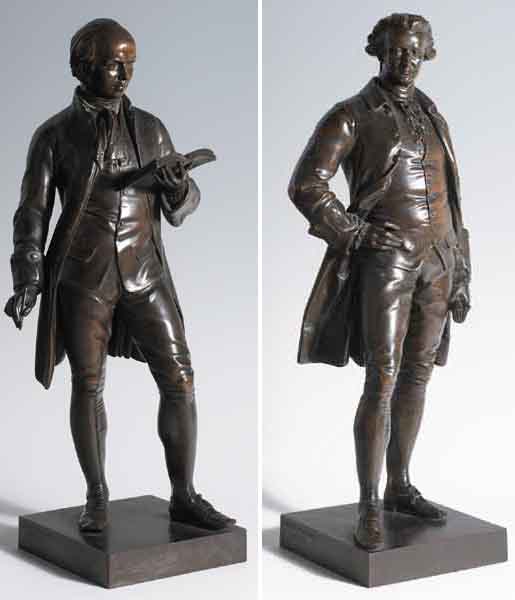
The article starts the ball rolling by recalling that Oliver Goldsmith (1728-1774) once observed that it was "the unhappy lot" of [Edmund] Burke (1729-1797) 'to eat mutton cold and cut blocks with a razor.'” (Like most Western newspaper articles, this one seeks to enrich its readers' vocabulary, offering them such rarely employed words as “anteprandial,” meaning “prior to eating a meal”; “prandial,” which means “of or pertaining to a meal”; and “haec fabula docet,” meaning “this fable teaches us.” Whether the journalist's purpose is pedantic or pedagogical is, perhaps, like the madness of many an Edgar Allan Poe protagonist, insusceptible to analysis.)


We are to learn, however, from Burke's “unhappy lot” that experiences which seem bitter during their occurrence can later prove to be fodder for amusement—that of others, if not our own. The “cold mutton” and the “blocks,” although unpleasant in the eating and in the cutting, respectively, nevertheless may later occasion humorous treatment. (Many stand-up comics echo this observation, declaring that calamity and catastrophe, especially of the personal variety, often bear the fruit of laughter.)


We are next advised that Joseph Addison (1672-1719)—the “Good Humor” columnist, either because of space limits or to impress his readers (or himself) concerning his intimacy with the authors whose names he bandies about, frequently uses only their surnames—divides humor into two classifications: “true” humor and “false humor.” The former involves “truth,” “good sense,” “wit” and “mirth.” (The columnist does not indicate whether it is truth, good sense, or wit and mirth that makes “true humor” true, but seems to suggest that true humor is derived from, or based upon, all these ingredients.) False humor is predicated upon “nonsense,” “frenzy,” and “laughter.”

Irving

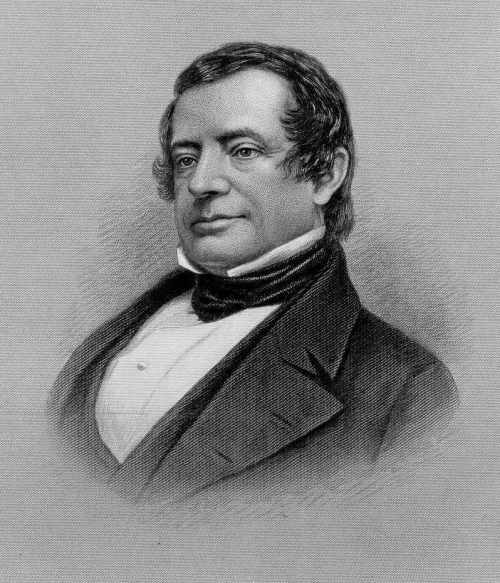
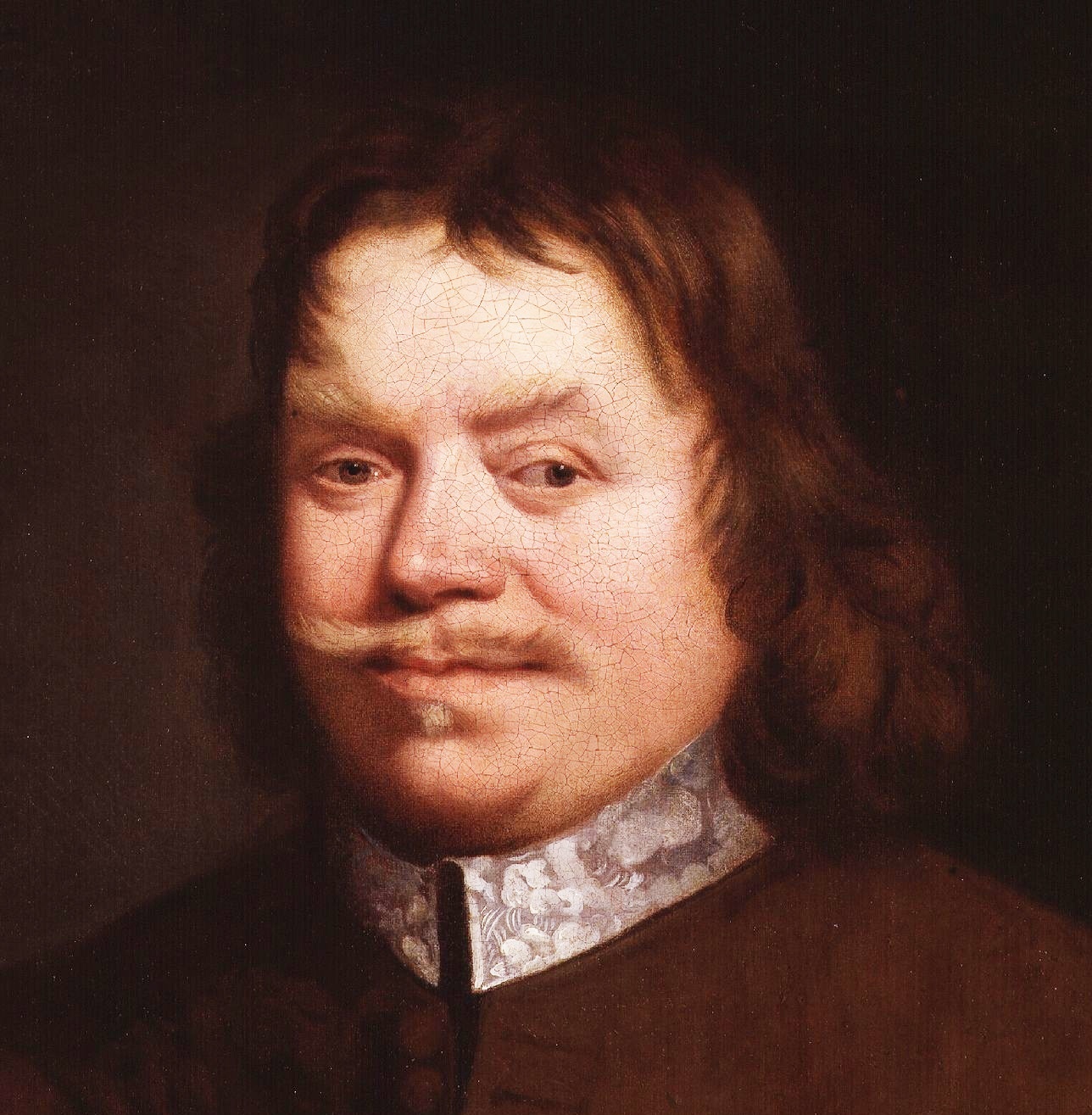
Next, the writer references “two other great humorists,” this time, perhaps to reveal the fact that he is not on as intimate terms with them as he is with the others whose names he has dropped with abandon, naming their full names: Washington Irving (1783-1859) and John Bunyan (1628-1688).


Bunyan

Neither of these “other great humorists” is very helpful, as the comments of both are so general as to be vacuous, Irving defining “honest good humor” as “the oil and wine of a merry meeting,” adding, with no more clarity, that “no jovial companionship [is] equal to that where the jokes are rather small and the laughter abundant,” despite his own earlier comparison of “honest good humor” with “ the oil and wine of a merry meeting.” Bunyan prefers poetry to prose, offering this obscure couplet: “Some things are of that nature as to make/ One's fancy chuckle while his heart doth ache.”

The article ends where it began: nowhere. Despite the aid of Goldsmith, Burke, Addison, Irving, and Bunyan, we learn virtually nothing about humor and less about wit, although our guide has insisted that “good humor is a great constituent in happiness in life,” while warning us that “wit, unless it is of the kindly sort” (in which case, it is not wit, after all, but a species of “good humor”) “may be valuable in giving a sense of intellectual supremacy” to those of us, presumably, who are troubled by poor self-esteem or who imagine ourselves as being intellectually inferior to others. Since wit “never makes friends,” the journalist assures us, we are “better off without it,” if we want to live a happy life. (Why, then, does the writer bring it up at all? To reach the allotted word count for his column, I suspect.)


The whole point of the column is to explain how we can, through the exercise of humor, live happily ever after, but the column does almost nothing to help us understand what humor is or how to employ it to this (or any other) purpose. However, in reading the column, we might have been entertained, if not amused, for a few minutes, and we might suppose that we had learned something worthwhile. We might even believe that we now have the secret of happiness for which humanity has longed since the days of our primeval parents.

Sunday, August 30, 2020

Humorous Columns of Frontier Newspapers: Part I

Copyright 2020 by Gary L.Pullman


In a time such as our own, when newspapers are quickly becoming a thing of the past, it is difficult, perhaps, to imagine how readers, in the past, looked forward to the delivery of their daily chronicles.

The newspaper brought the world into their homes, where the news of the day—stories of election fraud, of gunfights, or stagecoach and train robberies, of hangings, of gold strikescould be read in armchairs by the fireside or over bacon and eggs at breakfast tables.

Stories of travel and adventure, of newfangled inventions, of battle and of war in the planet's far-flung countries could be read and debated in pool halls and barbershops and saloons.

The newspaper opened parochial, small-town life on the frontier to the world at large. The stories, often reported in a dramatic tone, were calculated to provoke, to excite, to anger, and to amaze.

Journalism was emotional; unless a newspaper article did as good a job at arousing its readers' passions as it did in relating the facts, a story hadn't successfully performed its task. (In truth, sensationalism was often more important than objectivity, just as feeling was more significant than facts.)


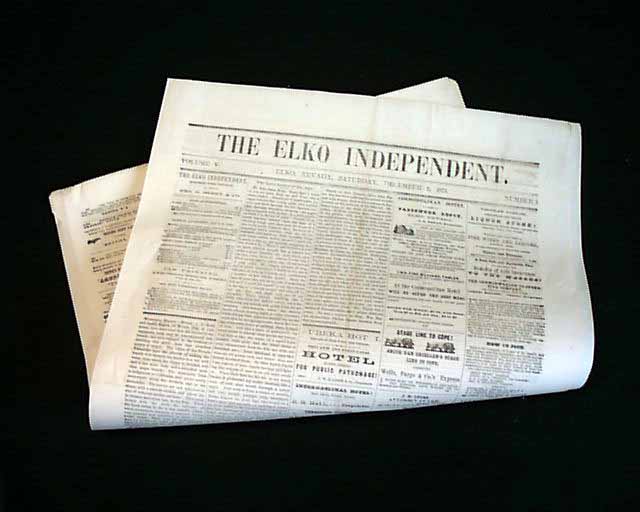
In their efforts to amuse and to be many, if not all, things to all readers, frontier newspapers also often contained humorous columns. Indeed, these periodicals included even analyses of the nature and methodology of humor, as in the “Wit and Humor” article published in the November 2, 1889, edition of Elko, Nevada's Daily Independent, which states that, although “laughter may be either genial or malignant, . . . it is allied rather to egoism and contempt than to affection and devotedness, the chief source of the ludicrous being the degradation of some person or thing which we have been accustomed to associate with power, dignity, or gravity.”

Although this is but one of several competing theories of what tickles the funny bone and why, it certainly prescribes, for reader and humorist alike, the main types of humor, their common wellsprings and method, and even the typical targets of the humorist. But our author, who prefers the protection provided by anonymity, further enlightens his readers as to the differences between wit and humor.


Sydney Smith

Originally, the writer instructs, “wit” referred to “intelligence,” but has since itself “become so degraded that paronomasia [the newspaper writers of yore were often intimately familiar with the lexicon] it is considered a species of wit.” The rest of the column continues to differentiate between humor and wit, backing its claims with allusions to the English wit Sydney Smith, the essayist William Hazlitt, the lexicographer Noah Webster, and the satirist Thomas Carlyle and ending with an example of each category.


As an instance of humor, the author cites Miguel de Cervantes's Don Quixote: the would-be knight  exemplifies humor, the columnist says, when he explains to his page, “The reason, Sancho, why thou feelest that pain all down thy back is that the stick which gave it thee was of length to that extent.”

As an exhibit of wit, the writer repeats the anecdote of a mute whose master reproached him for laughing at a funeral” by observing, “You rascal, you, I have been raising your wages for these two years past on condition that you should appear more sorrowful, and the higher wages you receive the happier you look.”

The article, both educational and amusing, is a good mix, and a good example, of the humor and wit its author defines, in all places, on the page of a newspaper published in one of the towns of the American Wild West!

Tuesday, June 23, 2020

Tips on Researching the Old West

Copyright 2020 by Gary L. Pullman

Authors who write historical fiction learn—or should learn—about a lot of topics related to the times in which their novels are set. I thought that readers and other fans of the genre might enjoy learning how this writer approaches such research.


For example, in writing On the Track of Vengeance, the fourth novel in my series, An Adventure of the Old West, I had occasion to research a number of subjects, some of which I used in the story, others of which, for one reason or another, fell by the wayside:


In 1880, how much did a gold bar weigh, and what was it worth?

A gold bar weighed 400 troy ounces, or 27.4 pounds and, in 1880, was worth $18.94 per troy ounce.

Therefore, a 27.4-pound (400-troy-ounce) bar of gold would have been worth $7,576.


Besides six-gun and six-shooter, what synonyms were available, in 1880, for the word “revolver”?

A revolver was also sometimes called a “wheelgun.”

In what year did these terms come into use:

Derringer: 1850
Gunfight: 1889 (oops! Can't be used in a novel set in 1880!)
Gunfighter: 1889
Gunfire: 1801
Gunman: 1620s
Gunplay: 1891 (oops! Can't be used in a novel set in 1880!)
Gunshot: early 15th century
Gunslinger: 1916 (oops! Can't be used in a novel set in 1880!)
Handgun: 1930s (oops! Can't be used in a novel set in 1880!)
Shootist: 1864
Shotgun: 1821
Six-gun: 1912 (oops! Can't be used in a novel set in 1880!)
Wheelgun: ? (may be best not to use unless additional research uncovers first-use date)


In addition to ensuring that the words used in a novel were actually in use at the time the story is set, it's a good idea to verify one's understanding of these terms. For example, a pommel isn't the same as a saddle horn, but a spittoon (which came into general use in 1811) is the same as the cuspidor (which originated in 1779).


Click the image to enlarge it.

Where can I find a good map of the Central Pacific Railroad route?

I found an excellent digital copy of a superb map of this route, but, alas!, I am now unable to locate the map or the website.

Fortunately, I saved a copy, which is highly recommended. A list of websites' URLs, or addresses, is great—until one of the sites vanishes from the Internet forever. It's best to keep both a list of the addresses and a copy of each image you may want as a present or future reference.


Where might I locate accounts of the origins of numerous towns along the route of the Central Pacific Railroad route?

For brief histories of the towns along the railroad's route, I used Wikipedia, verifying the online encyclopedia's accounts with other, more reputable sources. When I found a town of particular interest, I did further, more involved research, often using Google Books, public or university libraries, and other databases.


To confirm my memories and to further my knowledge about horses, I consulted YouTube videos by contemporary, working cowboys, marksmen, trackers, and other experts. As a result, I learned a lot about how to lead a string of horses (or mules); how a Colt .45 single-action revolver looks when it fires; how to track fugitives; and a lot of other topics.

When it's necessary to know what a past dollar amount would be in today's dollars, US Inflation Calculator is an invaluable resource. I've used it to get an idea of the value of amounts posted on reward posters, for example, and to evaluate the modern equivalents of gold prices and daily purchases and wages during the times in which my novels are set (about 1865 to 1880 at present).


Facsimiles of Western newspapers are often helpful in researching a story, as are vintage maps. For a variety of other historical research materials, try Internet Archive.


I had to become acquainted with not only the transcontinental railroad in general, but also with the route of the Central Pacific Railroad in particular and the use and detonation of dynamite, the building of snowsheds and trestles, labor relations associated with railroads and their workers, types of sabotage, the day-to-day functions of U.S. marshals, hotel registry books, wanted posters (Hollywood Westerns notwithstanding, few such posters actually included photographs of fugitives, I learned; usually, drawings were used, if there were any illustrations at all), and a host of other details.

I may have made a few mistakes (although I try hard to avoid doing so), but I'm confident that, if so, I made far fewer than I would have, had I not done my homework.


Keeping a database of useful sources and a gallery of usable photographs, diagrams (especially labeled ones), drawings, illustrations, and other sources of information about the Wild West can benefit an author in writing a whole series of novels. (It's educational and fun as well.)


Saturday, October 19, 2019

Frank and Frank

Copyright 2019 by Gary L. Pullman


First published in 1855, Frank Leslie's Illustrated Newspaper (later Leslie's Weekly) ended its run in 1922. As its title suggests, the periodical provided engravings and Daguerreotypes (and, later, photographs) as illustrations of the news of the day.

According to Joshua Brown, author of The Great Uprising and Pictorial Order in Gilded Age America, the newspaper's illustrated articles concerning the American Civil War, which were often shocking and sensational, catapulted the publication to success (20).


Frank Leslie

In producing the 16-page newspaper, a laborious sort of assembly-line approach was taken to produce each illustration. It took artists and engravers eight hours to produce one completed illustration—and this period of time represented an increase in speed; before the assembly-line process was introduced, producing a single finished illustration took as long as an entire week (Brown, Beyond the Lines: Pictorial Reporting, Everyday Life, and the Crisis of Gilded Age America 33).


However, a “beeswax mold” then had to be the finished picture then had to be made of the page bearing the illustration, after which this mold was immersed “in an electrocharged bath containing copper particles” so that it could be copperplated—a process which took “between thirty and forty-eight hours” (Beyond the Lines 33).

Over time, this process was expedited so that “by the 1880s three sets of Frank Leslie's, comprising forty-eight pages, were being electroplated in three hours” (Beyond the Lines 39).


Critics pointed out that the newspaper's claim that the resulting pictures provided “'eye-witness' recordings of events” was far from the truth, as they tended to be based more on the artists' imagination than on a “direct observation” of the events they supposedly depicted (Beyond the Lines 33).

The printing of the newspaper itself was also a time-consuming enterprise, but, like the production of its illustration, the time required for the printing of the publication also decreased thanks to technological developments and other innovations. For example, the newspaper's purchase of a Taylor Perfecting Press in 1858 allowed 1,200 copies per hour of the newspaper to be printed (Beyond the Lines 40). As a result, Frank Leslie's could report on the current events of the day while they were still current.


To appeal to the public, the newspaper routinely printed lurid stories; as Brown points out, such fare included engravings of details of “notorious crimes, . . . sexually charged cheap amusements and “violent” rough sports” (Beyond the Lines 41).

Indeed, the covers of the newspaper indicate the lurid nature of the publication's contents.

After almost 80 years, Frank Leslie's periodical ceased publication. Leslie died in 1880. As the result of an expensive train trip that he'd taken with his second wife, Miriam, and a bevy of their friends in 1887, which Miriam describes in her book From Gotham to the Golden Gate, an an economic recession, the publication was in poor financial shape (Woman of the Century 459).


Frank Leslie

Upon her husband's death, Miriam changed her name to his (Dictionary of American Biography, Vol. 11, 186), and, as Frank Leslie, ran the business until 1992, when, tiring of the task, she sold the publication “and its German edition for between $300,000 and $4000,000” (Woman of the Century 459).


William ("Willie") Charles Kingsbury Wilde

As a result, “in her early fifties,” she was “extremely rich” (Beyond the Lines 233). She married yet again, to her fourth husband, Oscar Wilde's younger brother William (“Willie”) Charles Kingsbury Wilde, who was seventeen years younger than she (Beyond the Lines 233).


List o f 19th-Century U. S. Western Frontier Forts, Part VIII: Montana

Note : This is the eighth of a series of lists of the  U. S. forts of the Wild West. It is intended for use in research by writers, readers,...