Copyright 2020 by Gary L. Pullman
In
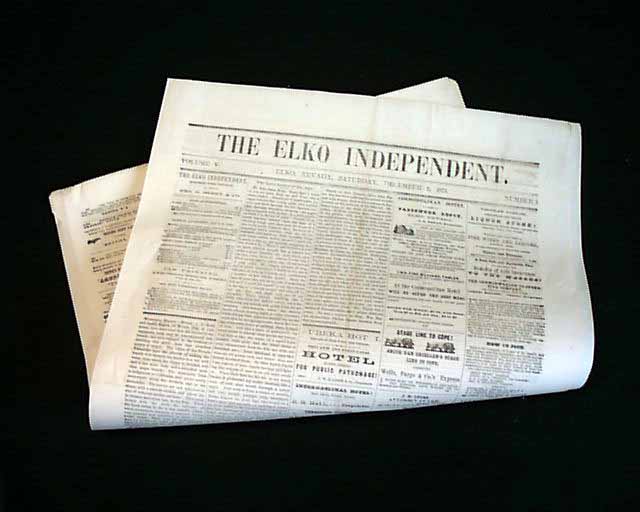
the April 11, 1895, supplement to the Barton County Democrat,
which was published in Great Bend, Kansas, the anonymous author of a
“Good Humor” column concerning “The Philosophy of Happiness
Under All Occasions” treats his readers to a treatise on the topic
of humor's frequent origin in unpleasant experiences.
Burke and Goldsmith
The
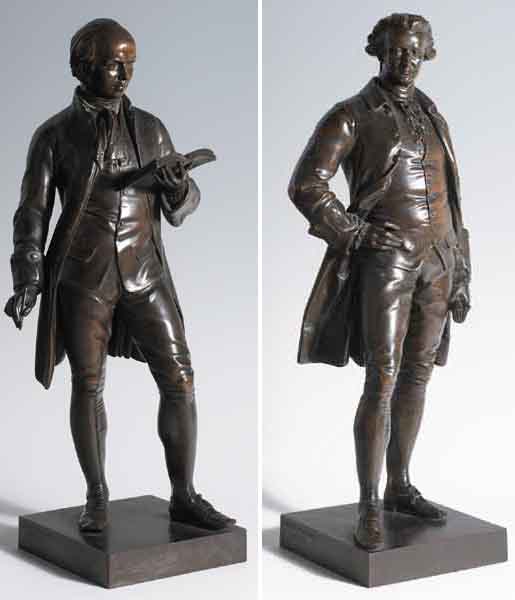
article starts the ball rolling by recalling that Oliver Goldsmith
(1728-1774) once observed that it was "the unhappy lot" of [Edmund] Burke (1729-1797) 'to eat
mutton cold and cut blocks with a razor.'” (Like most Western
newspaper articles, this one seeks to enrich its readers' vocabulary,
offering them such rarely employed words as “anteprandial,”
meaning “prior to eating a meal”; “prandial,” which means “of
or pertaining to a meal”; and “haec fabula docet,” meaning
“this fable teaches us.” Whether the journalist's purpose is
pedantic or pedagogical is, perhaps, like the madness of many an
Edgar Allan Poe protagonist, insusceptible to analysis.)

We
are to learn, however, from Burke's “unhappy lot” that
experiences which seem bitter during their occurrence can later prove
to be fodder for amusement—that of others, if not our own. The
“cold mutton” and the “blocks,” although unpleasant in the
eating and in the cutting, respectively, nevertheless may later
occasion humorous treatment. (Many stand-up comics echo this
observation, declaring that calamity and catastrophe, especially of
the personal variety, often bear the fruit of laughter.)
We
are next advised that Joseph Addison (1672-1719)—the “Good Humor”
columnist, either because of space limits or to impress his readers
(or himself) concerning his intimacy with the authors whose names he
bandies about, frequently uses only their surnames—divides humor
into two classifications: “true” humor and “false humor.” The
former involves “truth,” “good sense,” “wit” and “mirth.”
(The columnist does not indicate whether it is truth, good sense, or
wit and mirth that makes “true humor” true, but seems to suggest
that true humor is derived from, or based upon, all these
ingredients.) False humor is predicated upon “nonsense,”
“frenzy,” and “laughter.”
Irving
Next,
the writer references “two other great humorists,” this time,
perhaps to reveal the fact that he is not on as intimate terms with
them as he is with the others whose names he has dropped with
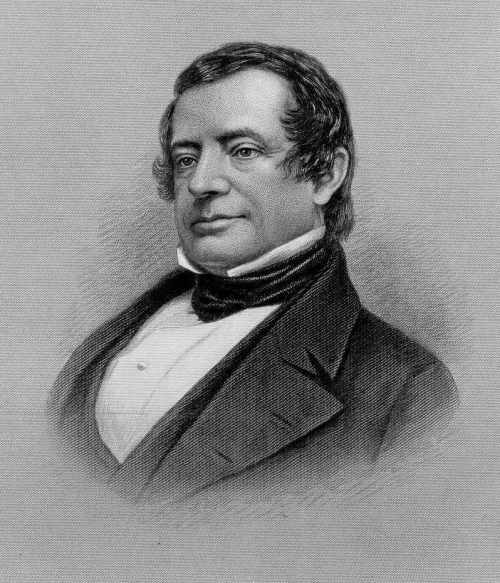
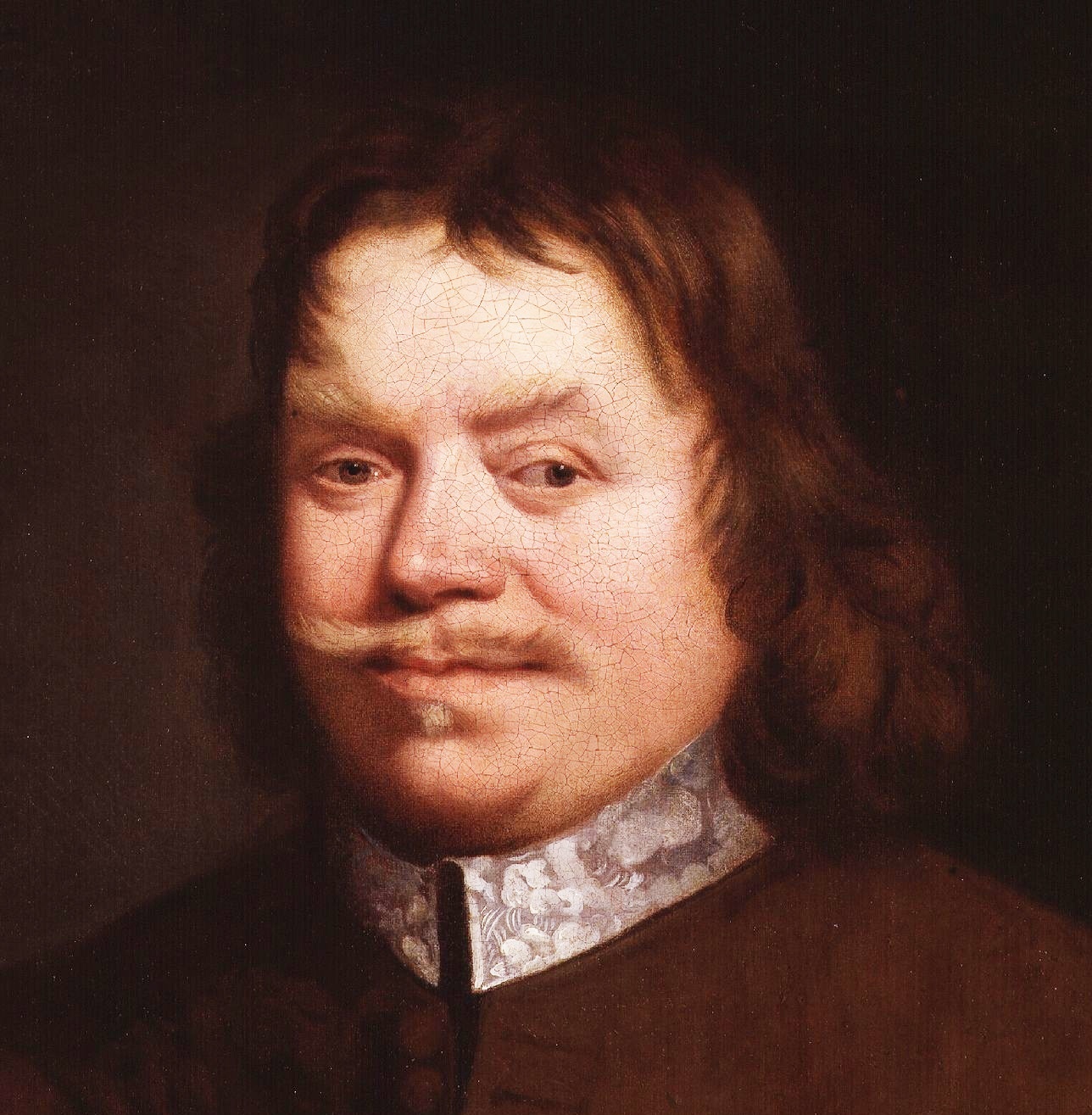
abandon, naming their full names: Washington Irving (1783-1859) and John Bunyan (1628-1688).
Bunyan
Neither
of these “other great humorists” is very helpful, as the comments
of both are so general as to be vacuous, Irving defining “honest
good humor” as “the oil and wine of a merry meeting,” adding,
with no more clarity, that “no jovial companionship [is] equal to
that where the jokes are rather small and the laughter abundant,”
despite his own earlier comparison of “honest good humor” with “
the oil and wine of a merry meeting.” Bunyan prefers poetry to
prose, offering this obscure couplet: “Some things are of that
nature as to make/ One's fancy chuckle while his heart doth ache.”
The
article ends where it began: nowhere. Despite the aid of Goldsmith,
Burke, Addison, Irving, and Bunyan, we learn virtually nothing about
humor and less about wit, although our guide has insisted that “good
humor is a great constituent in happiness in life,” while warning
us that “wit, unless it is of the kindly sort” (in which case, it
is not wit, after all, but a species of “good humor”) “may be
valuable in giving a sense of intellectual supremacy” to those of
us, presumably, who are troubled by poor self-esteem or who imagine
ourselves as being intellectually inferior to others. Since wit
“never makes friends,” the journalist assures us, we are “better
off without it,” if we want to live a happy life. (Why, then, does
the writer bring it up at all? To reach the allotted word count for
his column, I suspect.)

The
whole point of the column is to explain how we can, through the
exercise of humor, live happily ever after, but the column does
almost nothing to help us understand what humor is or how to employ
it to this (or any other) purpose. However, in reading the column, we
might have been entertained, if not amused, for a few minutes, and we
might suppose that we had learned something worthwhile. We might even
believe that we now have the secret of happiness for which humanity
has longed since the days of our
primeval parents.