Showing posts with label Kansas. Show all posts

Monday, August 31, 2020

Humorous Columns of Frontier Newspapers: Part 2

Copyright 2020 by Gary L. Pullman

In the April 11, 1895, supplement to the Barton County Democrat, which was published in Great Bend, Kansas, the anonymous author of a “Good Humor” column concerning “The Philosophy of Happiness Under All Occasions” treats his readers to a treatise on the topic of humor's frequent origin in unpleasant experiences.
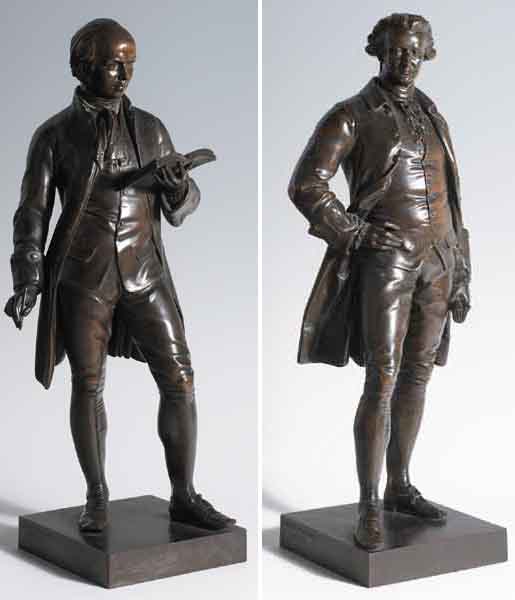


Burke and Goldsmith

The article starts the ball rolling by recalling that Oliver Goldsmith (1728-1774) once observed that it was "the unhappy lot" of [Edmund] Burke (1729-1797) 'to eat mutton cold and cut blocks with a razor.'” (Like most Western newspaper articles, this one seeks to enrich its readers' vocabulary, offering them such rarely employed words as “anteprandial,” meaning “prior to eating a meal”; “prandial,” which means “of or pertaining to a meal”; and “haec fabula docet,” meaning “this fable teaches us.” Whether the journalist's purpose is pedantic or pedagogical is, perhaps, like the madness of many an Edgar Allan Poe protagonist, insusceptible to analysis.)


We are to learn, however, from Burke's “unhappy lot” that experiences which seem bitter during their occurrence can later prove to be fodder for amusement—that of others, if not our own. The “cold mutton” and the “blocks,” although unpleasant in the eating and in the cutting, respectively, nevertheless may later occasion humorous treatment. (Many stand-up comics echo this observation, declaring that calamity and catastrophe, especially of the personal variety, often bear the fruit of laughter.)


We are next advised that Joseph Addison (1672-1719)—the “Good Humor” columnist, either because of space limits or to impress his readers (or himself) concerning his intimacy with the authors whose names he bandies about, frequently uses only their surnames—divides humor into two classifications: “true” humor and “false humor.” The former involves “truth,” “good sense,” “wit” and “mirth.” (The columnist does not indicate whether it is truth, good sense, or wit and mirth that makes “true humor” true, but seems to suggest that true humor is derived from, or based upon, all these ingredients.) False humor is predicated upon “nonsense,” “frenzy,” and “laughter.”
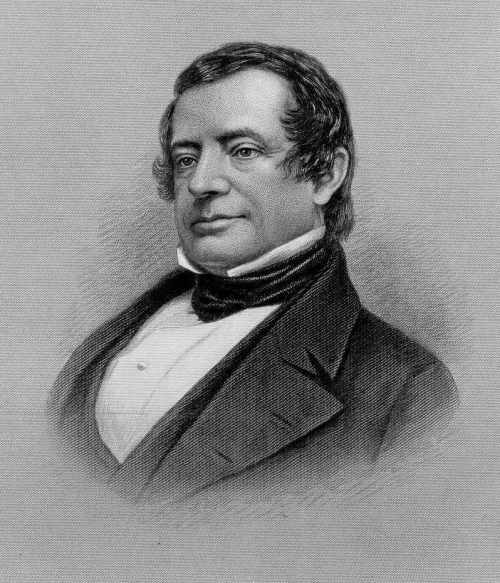
Irving

Next, the writer references “two other great humorists,” this time, perhaps to reveal the fact that he is not on as intimate terms with them as he is with the others whose names he has dropped with abandon, naming their full names: Washington Irving (1783-1859) and John Bunyan (1628-1688).
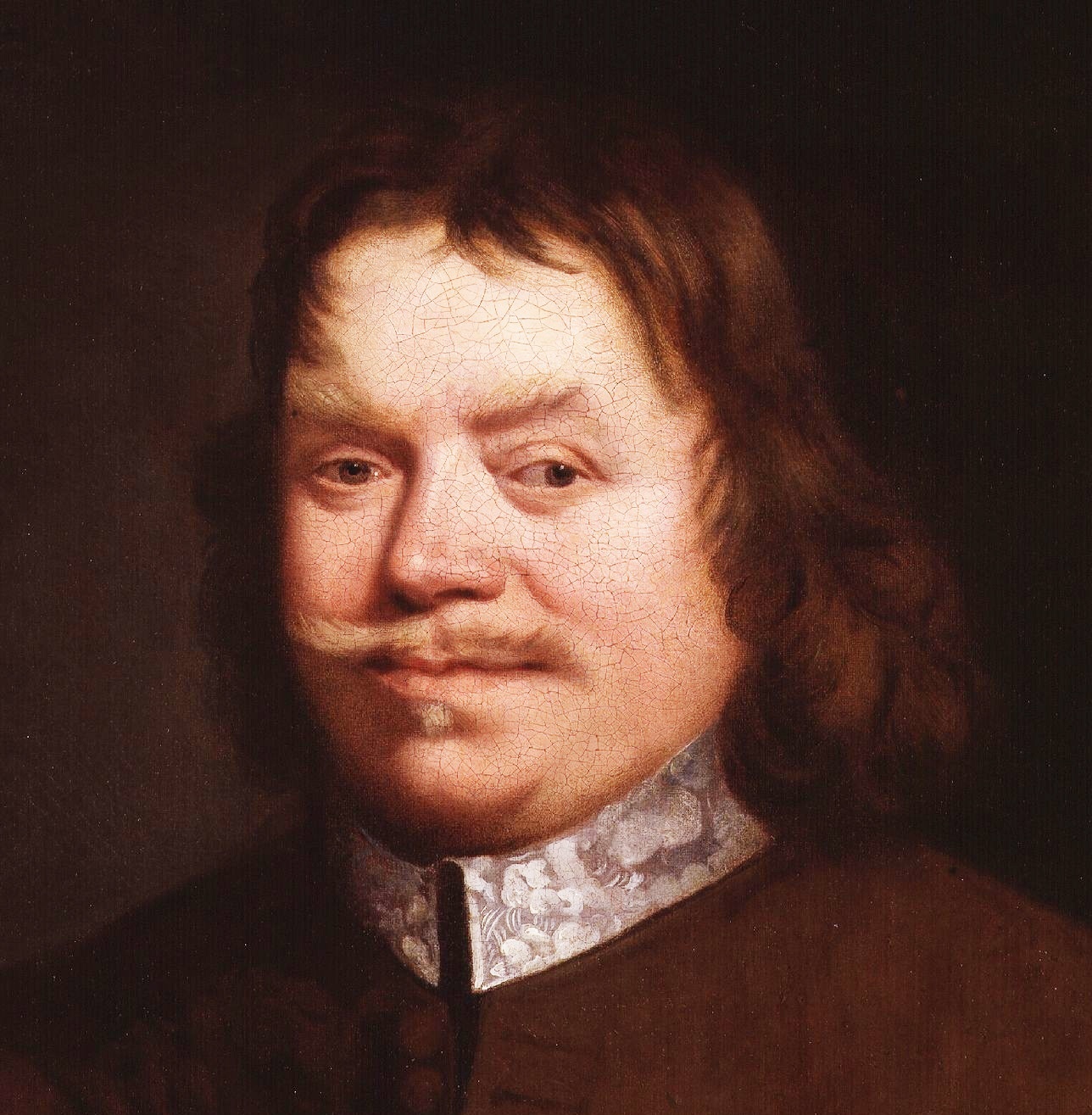

Bunyan

Neither of these “other great humorists” is very helpful, as the comments of both are so general as to be vacuous, Irving defining “honest good humor” as “the oil and wine of a merry meeting,” adding, with no more clarity, that “no jovial companionship [is] equal to that where the jokes are rather small and the laughter abundant,” despite his own earlier comparison of “honest good humor” with “ the oil and wine of a merry meeting.” Bunyan prefers poetry to prose, offering this obscure couplet: “Some things are of that nature as to make/ One's fancy chuckle while his heart doth ache.”

The article ends where it began: nowhere. Despite the aid of Goldsmith, Burke, Addison, Irving, and Bunyan, we learn virtually nothing about humor and less about wit, although our guide has insisted that “good humor is a great constituent in happiness in life,” while warning us that “wit, unless it is of the kindly sort” (in which case, it is not wit, after all, but a species of “good humor”) “may be valuable in giving a sense of intellectual supremacy” to those of us, presumably, who are troubled by poor self-esteem or who imagine ourselves as being intellectually inferior to others. Since wit “never makes friends,” the journalist assures us, we are “better off without it,” if we want to live a happy life. (Why, then, does the writer bring it up at all? To reach the allotted word count for his column, I suspect.)


The whole point of the column is to explain how we can, through the exercise of humor, live happily ever after, but the column does almost nothing to help us understand what humor is or how to employ it to this (or any other) purpose. However, in reading the column, we might have been entertained, if not amused, for a few minutes, and we might suppose that we had learned something worthwhile. We might even believe that we now have the secret of happiness for which humanity has longed since the days of our primeval parents.

Friday, July 17, 2020

The A. B. Seelye Company: A Story of Notions, Lotions, Potions, and Riches

Copyright 2020 by Gary L. Pullman


As Ann Anderson points out in Snake Oil, Hustlers and Hambones: The Anerican Medical Show, the entertainment that these carnival-style performances provided (between snake oil salesmen's product pitches) was “perfectly suited to isolated rural audiences” who enjoyed simple amusements (163). Performers included “blackface” comedians, musicians, mind readers, ventriloquists, magicians, and others (82).


Both comedies, such as the movie Poppy (1937), starring W. C. Fields, and a Walt Disney production, Alice's Medicine Show (1927). starring Lois Hardwick, and Westerns, including Little Big Man (1970), starring Dustin Hoffman and Faye Dunaway, and The Outlaw Josey Wales (1976) starring Clint Eastwood.


Some members of show audiences were easily convinced, or duped into believing, that the salesmen offered the elixirs of life. Others were skeptical (as were the physicians of the day). In Western films, though, medicine shows, as might be expected, were usually played strictly for laughs.
The very phrase “snake oil” suggests chicanery. In Europe during the 1800s, rattlesnake “oil” was regarded as a cure for arthritis and rheumatism. Whether or not this is true hasn't been proved, but the question, with regard to the “medicines” said to have been derived from vipers, including rattlesnakes, is moot, since, as Laurence M. Klauber points out, in volume two, of his Rattlesnakes, it's unlikely that snake oil ever actually contained snake oil (or any parts of these vipers).

Snake oil products are also known as “patent medicines.” The National Museum of American History explains why:


Patent medicines are named after the “letters patent” granted by the English crown. The first “letters patent” given to an inventor of a secret remedy was issued during the late 17th century. The patent granted the medicine maker a monopoly over his particular formula. The term “patent medicine” came to describe all pre-packaged medicines sold “over-the-counter” without a doctor’s prescription. In the United States very few preparations were ever actually patented.


The label on the front of a bottle of Seelye's Wasa-Tusa, a medicine “For Man and Beast, Internal and External,” lists its ingredients as “63% non-beverage alcohol, 10 minims [of] sulphuric ether and 7 minims of chloroform per ounce [of] alcohol derivative.”

Like most patent medicines, it's touted as effective in the treatment of a host of maladies: “Muscular Soreness, Bruises, Strains, Sprains, Simple Headache, Simple Neuralgias, Toothache, Simple Earaches, minor Irritations of the Throat, and where a counter-irritant would be used.”

A few drops taken “internally,” with water or milk, likewise remedies “Colic and Cramps due to Gas.” The product is also “Useful for Wire Cuts, Swellings, Etc., and on Animals” and works as effectively to alleviate “Colic in Horses” as it does to relieve the same malady in humans.

Wasa-Tusa cures so many conditions and diseases that it's hard to see why anyone would ever need to buy another medicine after purchasing The A. B. Seelye Company's nostrum. Considering all the ailments from which the product provides relief, if not, indeed, a cure, it is certainly worth its $1.25 retail price.


One of the most interesting facts about Alfred Barns Seelye (December 20, 1870 - February 14, 1948) is that he took the theatrics out of snake oil sales, treating the production, marketing, and distribution of his patent medicines as a business. In addition, as we shall see, he found innovative ways to entertain his customers and potential customers. If, after the passing of the medicine show, due to its ever-increasing extravagance and attendant expenses, Seelye would bring the show to the clientele--or a semblance of it, at least. As a result, he was immensely successful for years, his customer base and profits increasing dramatically.

Seelye studied both medicine at one college and literature at another, without graduating from either. In 1890, after moving from Illinois, where he'd grown up, to the famous cowtown, Abilene, Kansas, of which Wild Bill Hickock had once been marshal, Seelye set up a laboratory and began making Wasa-Tusa, Fro-Zona, and about a hundred other concoctions.

His success was tremendous, his company growing to the point that, at the pinnacle of his success, he employed over three hundred traveling salesmen, among other workers. He had to move his operations into a larger building, which also housed his Seelye Theater, which sat an audience of eight hundred.
He married Jeanette Taylor in 1893, and the couple increased Abilene's population by two, their daughters Mary Eleanor and Helen Ruth.

Founded in 1890, in Abilene, Kansas, Seelye's company was incorporated nine years later. By 1905, its snake oil sales had made Seelye a wealthy man, indeed.

It's not hard to understand why. The company offers something for everyone—and for every ailment.


A three-ounce jar of its Fro-Zona Company ointment is a superb after-shave, its menthol, camphor, and oils (peppermint, eucalyptus, and pine), and, of course, its petroleum, constituting a “soothing preparation” for everyday use. It cools “prickly heat, sunburn, insect stings, chafing, frost bites [sic], head colds, chapped skin, nasal irritation, superficial burns, and simple headaches.”

It can be rubbed “between the eyes,” daubed up the nostrils, or dabbed “behind the ears,” preferably before “retiring at night.” Apparently, it also works on toys: the front of the product's label shows a physician making a house call to examine a little girl's doll, as he holds a jar of the panacea.

The fact that Fro-Zona is a patent medicine is indicated on the bottle by a stamped notice of the balm's registry with the U. S. Patent Office.


In promoting his medicines, Seelye is sure to offer his customers more than their money's worth. A 1903 promotional “almanac” is also a “health guide,” and the combination almanac-health guide is also a cook book—three useful publications in one. In short, the booklet contains, “besides the weather forecasts, some excellent Cooking Receipts [sic] . . . and general information, as well as a history of the Seelye Medicines and their method of cure.”

In addition, it's chock full of advertisements for his lotions, potions, and nostrums. The fifty-two-page publication promotes “Ner-Vena, Wasa-Tusa, Magic Cough and Consumption Cure, Seelye's Wintergreen Ointment, Wintergreen Soap, A. B. Seelye's Happy Life Pills, Seelye's Universal Stock and Poultry Powder, Horse Liniment, Seelye's Hair Tonic and Restorative, and other remedies.”

The brochure's “Introduction” boasts of the company's success. Business was “excellent” in 1902, and sales in 1903 promise to be no less flourishing, as the company marks its “13th year” of continual growth,” satisfied customers singing the medicines' praises as products that not only “cure folks” but also “prolong life.” The booklet is quite a bargain for free (although, should readers care to do so, they're more than welcome to send in their testimonials concerning the benefits of the company's cures).


The brochure contains many delightful, if not always informative, illustrations as well. One, labeled “The Human Body,” shows the figure of a man, lines connecting the animals of the zodiac to the various organs of the human anatomy over which these signs are said to govern: Gemini, the arms; Leo, the heart; Taurus, the neck; and so on.

The booklet contains all manner of trivia and esoteric information. In addition to the astrological associations with human anatomy, a list of religious holidays and their respective dates appears, beneath which the year's “Morning and Evening Stars” are identified.

As might be expected, advertisements and testimonials make up a substantial part of the publication, appearing either as full-page texts or as sidebars, complete with a photograph of the gentleman or lady who offers an endorsement of a particular product.


Mrs. Julia Weathers, for example, of Sedgwick, Kansas, who once suffered, it seems, from “weak nerves,” contends that “Dr. Seelye's Ner-Vena is the greatest medicine” for treating this condition that she has ever seen. “Dizzy spells” had afflicted her, causing her to “stay in bed half a day at a time,” before “three bottles” of Seelye's “remarkable remedy” remedied her condition, curing her. And that's not all! She adds, Ner-Vena also benefited her heart in some way. (She doesn't say how, exactly.) Whatever the wonderful nostrum did to help her heart, though, prompted her to declare, in no uncertain terms, “Ner-Vena was indeed a God send to me.”

These features weren't live acts, of course. There were no magicians and clowns, no ventriloquists or men on stilts, but there were interesting articles, loads of trivia, intriguing illustrations, esoteric lore, and, of course, apparently heartfelt thanks, product recommendations, and personal testimonials from satisfied customers. On the frontier, especially in rural areas far from the nearest town, the arrival of Seelye's combination almanac-health guide-cook book must have been welcome, indeed. Its pages provided escape from boredom and drudgery while acquainting its readers with the wonderful nostrums that could cure nearly any ailment known to medicine, and, best of all, it was delivered free to one's doorstep, upon request.

A help wanted advertisement in the May 15, 1902 issue of the Abilene Weekly Reflector also suggests that the company was doing well. Despite having forty employees, the company was seeking ten to twelve more salesmen and had hired the Abilene Carriage Company to build “ten new wagons” to carry products directly to the customers who ordered them.

Despite the announcement's headline, “Good Chance for Hustlers,” it seems that the newspaper found the company to be a good place to work: “Dickinson county young men need not hesitate to engage with the A. B. Seelye Medicine company as they are reliable and do well by their salesmen.”


Yes, whatever the effectiveness of its many “medicines,” The A. B. Seelye Company was good to its founder. With the fortune he earned, he built the fabulous 11,000-square-foot, twenty-five-room Seelye Mansion in Abilene, Kansas.


A beautiful home in the Georgian style, this magnificent mansion, built in 1905 for $55,000, boasts Edison light fixtures, a Tiffany fireplace, eleven bedrooms, a ballroom, a music room featuring “gold French furniture and a grand Steinway piano,” and a bowling alley. The house was also home, at one time, to Seelye's laboratory (where, it seems likely, plenty more nostrums were concocted),Seelye was even more extravagant in purchasing the mansion's elegant furniture. He bought most of it at the 1904 St. Louis World's Fair, paying more for it than he paid to build the house!


The bowling alley, which “was ordered at the Chicago World's Fair,” was constructed by the American Box Ball Company, Indianapolis, Indiana. It not only automatically returns the ball, but features an unusual feature: the pull of a lever resets the “drop-style pins.”

As a youngster, Dwight D. Eisenhower delivered ice to the mansion; later, of course, the boy would become Supreme Commander of the Allied forces during World War II and the president of the United States, but, for the Seelye daughters, Helen and Marion, who lived in the house following their father's demise, Ike would remain “a man from the wrong side of the tracks.”

Dwight D. Eisenhower and Frank Lloyd Wright

Another famous person associated with the Seelye Mansion is architect Frank Lloyd Wright, who “suggested renovated the interior” of the home in the 1920s.


Seelye's Wasa-Tusa, his Fro-Zona Company ointment, his Magic Cough and Consumption Cure, his Wintergreen Ointment, his Wintergreen Soap, his Happy Life Pills, his Universal Stock and Poultry Powder, his Horse Liniment, his Hair Tonic and Restorative, and all his other preposterous products—and his innovative and tireless efforts in promoting them—made the purveyor of dubious notions, lotions, and potions a remarkably wealthy man who lived out his life in luxury, perhaps tinkering with formulae and concocting new “medicines” right up to the end of his days.


Tuesday, November 12, 2019

Charles Siringo: The Moral of the Story

Copyright 2019 by Gary L. Pullman

https://www.amazon.com/Cowboy-Detective-Twenty-Two-Famous-Agency/dp/154500188X/ref=sr_1_1?keywords=a+cowboy+detective+siringo&qid=1573582342&sr=8-1

According to Pinkerton detective Charles (“Charlie”) Siringo, a year after Dodge City's incorporation, 81 men had been buried in the town's graveyard. Eighty of them had been killed, only one having experienced “a natural death” (A Cowboy Detective 315).


It was in this wild West town that Siringo first encountered Bat Masterson, the nighttime bartender at the Lone Star dance hall. Siringo, attracted by the hall's good-looking women and the establishment's “Texas flavor,” visited the place with a cowboy friend, “Wess” Adams (315). Wess, complaining of having been insulted by Jim White, a buffalo hunter, enlisted Siringo's assistance (315).


Bat Masterson

In the ensuing barroom fight, Masterson intervened, tossing a handful of “heavy beer glasses” at Siringo, one of which, breaking, drew blood (135). A dozen men were involved in the fracas; Masterson didn't differentiate between brawlers and bystanders, but struck anyone in range of the ice mallet he'd taken from its place behind the bar (135).


Jim White

Some of the fighters clubbed others with their pistols. When Siringo saw White “lying on the floor apparently dead, with blood flowing from wounds in the head,” and witnessed Adams being stabbed “in the back,” he beat a hasty retreat, Adams in tow, to their horses, hitched out front, and threatened a police officer, Joe Mason, who barred their way, before riding out of town (136-137).

Siringo and Adams took refuge in a stock yard “shanty.” Examining Adams's knife wound, Siringo saw that it was, indeed, “serious”:

. . . The knife had been thrust in and then brought around in a semi-circle in the shape of a large horseshoe. The open part of the shoe was where the flesh was not cut, and the other part of the wound [was where] the flesh stood out several inches from the body. The clothing was saturated with blood (317).


Charles Siringo

There was nothing to do but ride back into Dodge. Suspecting that the police might be waiting to ambush him, should he return to town, Siringo took a different route back to Dodge, where he bought supplies at the local drug store: “needles and thread, sticking plaster, and a candle” (318).

Returning to the shanty by the same route he'd ridden back to town, Siringo tried, unsuccessfully, to stitch his friend's wound, but found that “the horseshoe[-] shaped protruding flesh could not be pushed back into place on a level with the rest of the body” (318).

Siringo had no alternative but to apply the sticking plaster, before the men rode eighteen miles “to the Bates & Beals cattle camp,” as Adams became progressively weaker “from loss of blood” (318).

Later, Siringo learned that White, “the boss of a large gang of buffalo hunters,” had survived; he ultimately “recovered” from his “many wounds” and the multiple cracks in his skull (319). Siringo also learned, years later, upon meeting Masterson, that he'd been right to take a different route back into Dodge than the one he and Adams had taken out of town, as Masterson “and a gang of officers” had, indeed, been lying in wait to ambush him, had he ridden back to Dodge by the same path he'd left town. “Armed with rifles and shotguns,” the posse had “stood guard till morning,” intent upon making “angels” of the suspects “if [they] returned” (318).


Siringo ends his account of “how near” he'd come “to being put out of business by Bat Masterson” (315) by drawing a moral for his story: “This little scrape illustrates what fools cowboys were after long drives over the rail” (319).

Sunday, September 1, 2019

An Outlaw Who Became A Pair of Shoes and Another Who Became a Late TV and Movie Star

Although they are undeniably macabre, death photos of Old West outlaws show just how wild this period of American history truly was.


There's also a story behind most of the surviving pictures of dead criminals. Here are a couple of examples, for those with strong stomachs.

George Francis Warden (aka Parrot)


George Francis ("Big Nose")  Warden (aka Parrot)

Captured after an attempted train robbery, George Francis (“Big Nose”) Warden (aka Parrot) (1834-1881), who also went by a number of other aliases, was captured, tried, convicted, and sentenced to be hanged.

After he attempted to escape from jail, a mob lynched him from a telegraph pole. He wasn't buried, though, because a pair of local physicians, John Osborne (1858-1943) and Thomas Maghee (1842-1927), hid his corpse in a whiskey barrel and spirited the outlaw's body away, hoping to study his brain. One of the doctors, Thomas Maghee, had a criminally insane wife. He hoped that, by studying Big Nose George's brain, he might help her. (Another report contends that, rather than both doctors' hiding the body, Osborne sent Big Nose George's brain to Maghee.)

The other doctor, John Osborne, also had designs on Big Nose George's body, but Osborne's were far weirder than his fellow physician's plans for the outlaw's brain.


Osborne made a death mask from the lynched man's face before skinning Big Nose George's thighs and chest. He sent the skin to a tannery to have it made into a pair of shoes and a doctor's bag.
According to a news report, Osborne instructed the tannery to retain Big George's nipples as proof that the shoes were made from human skin, but his directive was ignored.


Gov. John Osborne

Later, when Osborne, a Democrat, was elected as Wyoming's governor, he wore the shoes to his inaugural ball.

Supposedly, Osborne was motivated by revenge: Big Nose George had caused a delay to a train aboard which Osborne was traveling to a party.

Even after all this mischief, what was left of Big Nose George's remains got no rest: they're now exhibits in the Carbon County Museum in Rawlins, Wyoming.

Elmer McCurdy

The train he robbed near Okesa Oklahoma on October 4, 1911, was the last Elmer McCurdy (1880-1911) would ever rob: he was shot to death in a gunfight with police.


Elmer McCurdy as Johnson displayed him

An undertaker, Joseph L. Johnson, embalmed the body, but when no relative claimed the corpse and no one would pay him for the service he'd rendered, Johnson decided to dress the body, stand it up inside a wooden coffin, place a rifle in McCurdy's hands, and exhibit the corpse to anyone who paid him a nickle for the privilege.


As an exhibit, the dead outlaw proved popular enough to attract the interest of James Patterson, the owner of the Great Patterson's Carnival Show. Posing as one of McCurdy's brothers, Patterson and an accomplice called Wayne, who also claimed to be one of the outlaw's brothers, shipped the corpse to Arkansas City, Kansas. McCurdy's mummy was a popular draw for Patterson until the showman sold his business to Louis Sonney.
Sonney exhibited wax figures of such outlaws as Bill Doolin and Jesse James, and the mummified body of McCurdy fit right in with Sonney's Museum of Crime. Upon Sonney's own death, the traveling days of McCurdy's corpse came to an end, at least for a time, as his body was stored in a Los Angeles warehouse. However, McCurty's corpse made a cameo appearance in the 1967 Hollywood movie She Freak, for which the mummy was an actor on loan to producer David F. Friedman.


The outlaw's corpse changed hands a few more times and was exhibited on Mount Rushmore and at an amusement park fun house in Long Beach. It also starred in an episode of the television series The Six Million Dollar Man, playing a hanged man. When a grip moved the body, an arm broke off, revealing human bone and muscle tissue, and police removed the mummy to the Los Angeles coroner's office. The coroner, Dr. Joseph Choi, found that the corpse had died of a gunshot wound. A forensic anthropologist, Dr. Clyde Snow, identified the skull as being that of Elmer McCurdy.


The remains were buried in the Summit View Cemetery in Guthrie, Oklahoma, next to those of outlaw Bill Doolin, and two feet of concrete were poured over McMurdy's coffin to ensure that, finally, he would be able to rest in peace.


As an outlaw, McCurdy wasn't all that successful: the train he'd helped try to rob turned out to be a passenger train, not the train he and his fellow robbers believed was carrying $400,000 in cash bound for members of the Osage Nation, and the robbery netted the gang only $46, some whiskey, a revolver, a coat, and a watch—not much booty in exchange for his life. In death, though, McCurdy's mummy proved not only an accomplished traveler but also a superb entertainer—sideshow attraction, movie star, and television actor—who entertained millions.

The Old West doesn't get any wilder than that!

List o f 19th-Century U. S. Western Frontier Forts, Part VIII: Montana

Note : This is the eighth of a series of lists of the  U. S. forts of the Wild West. It is intended for use in research by writers, readers,...