Showing posts with label Wild Bill Hickok. Show all posts

Monday, December 2, 2019

Wild Bill Hickok's Wild Bear Story

Copyright 2019 by Gary L. Pullman


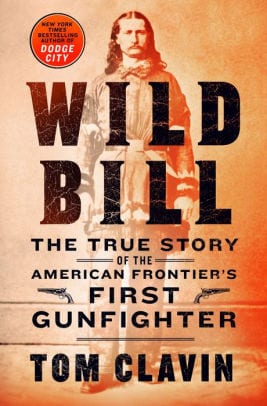
In Wild Bill, his biography of Wild Bill Hickok, Tom Clavin relates an anecdote about Hickok's alleged encounter with a cinnamon bear.


Wild Bill Hickok

According to Clavin, the story probably happened, although “a few researchers have disputed that the encounter” between Hickok and the bear “ever took place” (38).

It seems that the gunfighter was working as a teamster when “he found a bear blocking the road,” whereupon he climbed off his wagon “and shot her in the head.” The gunshot didn't do anything but anger the mother bear, causing her to attack, "crushing Hickok against her” (38).


He responded by shooting her in the paw, after which the bear locked onto his left arm and began to bite; Hickok jerked his Bowie knife from his belt and slashed "the bear's throat” (38).

Somehow, Hickok managed to drive his “freight wagon to the next town,” despite his extraordinary pain, and the local sawbones treated his patient “for broken bones in Hickok's chest, shoulder, and arm” (38).


Clavin mentions a film that features a bear attack: The Revenant, starring Leonardo DiCaprio (37). (Another movie, set in Canada, that features a horrific bear attack is Backcountry.)


Wednesday, November 20, 2019

Nineteenth-Century Guns: What's in a Name (Part 1)

Copyright 2019 by Gary L. Pullman

Several weapons that first appeared during the days of the American Wild West are named for famous people.


The Armstrong breech-loading gun was named after its English designer Sir William Armstrong (1810-1900). In 1854, Armstrong sold the Secretary of State for War on making a rifled breech-loading three-pounder for testing purposes. Later models fired ammunition of higher calibers, including the largest among them, a 100-pounder. Although the guns were more expensive, they were also safer, but, ultimately, their design was found to be too complicated, and loading them was a time-consuming process involving several discrete steps. The Ordnance Selection Committee reported its conclusions:

The many-grooved system of rifling with its lead-coated projectiles and complicated breech-loading arrangements is far inferior for the general purpose of war to the muzzle-loading system and has the disadvantage of being more expensive in both original cost and ammunition. Muzzle-loading guns are far superior to breech-loaders in simplicity of construction and efficiency in this respect for active service; they can be loaded and worked with perfect ease and abundant rapidity.

As a result, the military resumed its use of muzzle-loading guns.


Sir William Armstrong

Armstrong, a man of many talents and abilities, is considered the father of modern artillery. A well-respected inventor and philanthropist,” he was knighted, and Queen Victoria later elevated him to the peerage as a baron (Robert P. Dod, The Peerage, Baronetage and Knightage of Great Britain and Ireland 93). In addition to the breech-loading gun named for himself, Armstrong also developed the hydraulic accumulator.


Samuel Colt

Samuel Colt began making weapons in the 1830s, securing a British patent for an improved revolver design in 1836. According to True West, the weapon that Wyatt Earp used during the 1881 Shootout at the OK Corral in Tombstone, Arizona, Earp “probably” used a Colt single-action revolver with a ten-inch barrel. A Tactical Life article indicates that Bat Masterson “ordered a total of eight single-action revolvers from Colt’s,” the “most notable” of which was a customized “nickel plated short .45 calibre” (source's italics):


Bat Masterson

. . . make it very Easy on the trigger and have the front Sight a little higher and thicker than the ordinary pistol of this Kind. Put on a gutta percha handle and send it as soon as possible, have the barrel about the same length that the ejector rod is (source's italics).


Wild Bill Hickok

The favorite sidearms” of Wild Bill Hickok, who earned his living as a lawman a bit earlier than Earp and Masterson, were a pair of “a pair of elegantly engraved, ivory-handled 1851 Navy Colt cap and ball .36 caliber revolvers [source's bold]. . . [the cylinders of which were] engraved with a naval battle scene between Texas and Mexico” (“Wild Bill's Colts”).

Employed by his father, Colt worked on several ideas for inventions, one of which was the first pistol he'd ever created. Unfortunately, when the weapon was fired, it blew up (R. L. Wilson, Colt: An American Legend 8). The rifle on which he was working at the same time fared better (Colt: An American Legend 8). Leaving his father's employ, he traveled across the United States and Canada, demonstrating the effects of nitrous oxide, calling himself the Celebrated Dr. Coult of New York, London, and Calcutta” (Gardner Soule, The Story of Sam Colt's Equalizer” in Popular Science. 179 (6): 89. 8).


After focusing on a handgun with one barrel, rather than multiple barrels, he managed to find a financial backer and was able to secure a patent in 1836 for the first model of his Colt revolver (Soule, 89). Eventually, with modifications and refinements, his revolver would become one of the most popular handguns in the Wild West.


In 1852, Henry Deringer gave the world the small handgun with a large bore that is named (but misspelled) for him. Muzzle loaded, the percussion-cap pistol fired one shot. Usually sold in pairs for $15 to $25 for both, these weapons were known in the Wild West as “boot pistols” (Gettysburg Museum), “Vest Pocket Pistols,” or “sleeve guns

Thursday, November 7, 2019

Past Glimpses of the American Wild West

Copyright 2019 by Gary L. Pullman

https://wyominghistory.blogspot.com/2017/12/on-this-day-in-wyoming-history-now.html

 The format of Patrick T. Holscher's book On This Day in Wyoming History encourages his reports of historical facts as though they were tidbits of trivia. As a result, his account of Wyoming's history, day by day, is an easy, entertaining read; occasionally, it also surprises.

For example, did you know that, on January 5, 1883, Cheyenne was first “lighted by electric lights” (5) Neither did I. I'd have thought the date would have been much later—and I'd have been wrong. (Electric streetlights would follow on January 15 of the same year [16].)

Likewise, I had no idea that a play had been produced “based on Owen Wister's novel The Virginian,” but this very drama opened on Broadway in 1904, two years after Wister's novel was published. What, one might wonder, has the opening of the play in New York have to do with Wyoming? Simple: “The book, hence the play, is set entirely in Wyoming” (5).

https://wizzley.com/speaking-ill-of-the-dead/

As the title of Jodie Foley and Jon Axline book suggests, the authors serve up a decidedly different dish in their In Speaking Ill of the Dead: Jerks in Montana's History. Who among us has never had the misfortune of knowing a jerk or two? (Indeed, which of us, on occasion, hasn't been a jerk?)

Montana's had its fair share. Two of them, Boone Helm and John Johnston, better known, in some circles, as “Liver-Eatin' Johnston,” were known for the proclivity for consuming human flesh. Boone was, indeed, a cannibal, the authors report, whereas “Johnston was a cannibal by reputation only” (62).

It's difficult to discern which was the “jerk” in the strange story the authors tell about Bear's Rib and Sir St. George Gore, an English baronet who journeyed to the United States to hunt the country's abundant wildlife.

When Gore and his party of thirteen men trespassed on the sacred lands of the Sioux, Bear Rib's war party surrounded the interlopers. Instead of killing Gore and his men on the spot, Bear Rib let them leave along the same path they'd followed onto the Sioux's lands, but first made them surrender “their weapons, their equipment, their horses, their clothing, and their foodstuffs” (28).

For five weeks, the naked men lived on such delicacies as “roots, berries, lizards, insects, birds' eggs, and small game,” without benefit of a cooking fire, and cut “their feet on prickly pear cactus.” They also alternately froze or “toasted.” Finally, after traveling in this fashion for nearly three hundred miles, Gore and his entourage encountered “a hunting band of friendly Hidatsa tribesmen” who, taking pity upon the bedraggled party, fed them before leading “them to their camp near Fort Berthold on the Missouri,” whereupon the baronet and his men, once again clothed, resumed their Wild West adventures (29).


Buffalo Bill Cody hired some of the more illustrious men and women of the Wild West, including Sitting Bull, Annie Oakley, and, at one time, Wild Bill Hickok. As Buffalo Bill himself (William F. Cody) points out in his book The Wild West in England, Buffalo Bill's Wild West was not a haphazard show; its “standard program” featured such fare as “racing between cowboys, Mexican vaqueros, and Indians and horsemanship demonstrations, such as the roping and riding of bucking horses, and a Virginia reel on horseback,” and “marksmanship exhibitions . . . made stars of Annie Oakley” and others (xvi).


In 1887, Buffalo Bill took his show to England, where he and his troupe toured for a year, giving a command performance for Queen Victoria. “During its six months' run in London,” the entertainers performed “fourteen times a week” for audiences of more than twenty thousand each. Besides the queen, other “distinguished” guests included future prime minister William Gladstone and Edward, Prince of Wales (xxiii).

Tuesday, October 22, 2019

The Life and Death of Wyatt Earp

Copyright 2019 by Gary L. Pullman


Wyatt Earp

Obituaries. I never read them when I was younger. I don't read many of them now. Anyone who does, though, soon realizes what an odd, rather grotesque type of essay they are, part biography and part eulogy.

Most death notices also provide a handy, if not dandy, summary of the times in which the dearly departed lived. (In obituaries, almost all of the departed are “dear,” regardless of the what they may or may not have done during their lifetimes.)

Wyatt Earp's obituary.

The Internet Archives website stores the Los Angeles Times's January 14, 1929, obituary of Wyatt Earp. The death notice's headline reads, “Tamer of Wild West Dies.” The piece's subtitle offers a tad more information, even as it further characterizes the decedent: “Wyatt Earp, Picturesque Gun-Fighting Marshal of Frontier Days, Passes Without Boots On.”

Wild Bill Hickok

The article begins with name-dropping, as its anonymous author reminds the newspaper's readers that Earp was friends and “colleagues” with the likes of “Wild Bill” Hickok, Bill Tilghman, Ben Thompson, and “Bat” Masterson. (No mention is made of Earp's greatest friend and colleague, Doc Holliday.

Some of the information the obituary reports isn't altogether reliable. Earp may have met Hickok, but the marshal of Abilene, Kansas, wasn't a “friend” of Earp's, and, although Earp knew Thompson on a casual basis, the outlaw was far from one of Earp's pals.


Shootout at the OK Corral.

The obituary notes that Earp helped to bring “law and order into the rough cow camps of the West with .45-caliber bullets.” While it's true that Earp did exchange bullets with his adversaries in the Shootout at the OK Corral and during the equally famous vendetta ride that followed this event, he more often buffaloed his adversaries than shot them. However, it seems that the Times author wanted to sell his readers on the image of Earp as a “picturesque” figure; to do so, he apparently thought it necessary to exaggerate the facts a bit.


Doc Holliday

In mentioning the OK Corral gunfight, the writer makes no mention of Holliday, although the other participants are named. Perhaps the author supposed that a mention of Hickok would detract from the luster of Earp or would tarnish the carefully contrived image of the deceased that the author appears to have labored to depict.


Josephine ("Sadie") Earp

Another possibility might be that allusions to Holliday were omitted in deference to Earp's widow, who took pains to preserve a pristine, rather than a picturesque, view of her late husband. References to his association with a drunken, boozing gambler and gunfighter whose common-law wife had been (like Earp's own second wife) a prostitute might not fit with the idea that Earp was a heroic lawman who helped to “tame” the Wild West.

Bob Fitzsimmons (left) and Tom Starkey

Other of Earp's endeavors are cited, including his prospecting for gold in the Klondike; his controversial refereeing of the Fitzsimmons-Starkey boxing match in Oakland, California; his taming of Colton, California; and his management of the copper mine and “four oil wells . . . near Bakersfield,” California, that he owned and his “breeding of horses.”

As much a jack-of-all-trades in his advanced years as he'd been in his prime, Earp also offered “technical advice” to early Hollywood filmmakers concerning “their productions.”


William S. Hart

At the end of the obituary, the writer again drops a few names: actor “Bill” Hart, movie producer Wilson Mizner, boxing promoter Tex Rickard, Earp's widow Josephine (“Sadie”) Earp, and his sister Mrs. W. Edwards. Earp's “honorary pallbearers,” readers learn, included Hart and Mizner.


Milton Mizner


Tex Rickard

Friday, September 27, 2019

Another Great (But Dated) Source for Fans, Readers, and Writers of Westerns

The Encyclopedia of Western Gunfighters by Bill O'Neal provides a wealth of information concerning (among many others—the book includes 587 of them!) Robert A. Clay Allison, Deputy U. S. Marshal Samuel Bass, William Morton Breckenridge, William F. (“Billy the Kid”) Clairborne, Joseph Isaac (“Ike”) Clanton, Florentine Cruz, George (“Big Nose”) Curry, Bob Dalton, Emmett Dalton, Grattan (“Grat”) Dalton, Morgan Earp, Virgil Earp, Warren Earp, Wyatt Berry Strapp Earp, Robert Ford, Patrick Floyd Garrett, William (“Curly Bill”) Brocius, John Wesley Hardin, James Butler (“Wild Bill”) Hickok, John Henry (“Doc”) Holliday, Thomas (“Black Jack”) Ketchum, Nashville Franklin (“Buckskin Frank”) Leslie,” Harvey (“Kid Curry”) Logan, Frank McLaury, Thomas McLaury, Sherman McMasters, Edward J. Masterson, James P. Masterson, William Barclay (“Bat”) Masterson, Dave H. (“Mysterious Dave”) Mather, “Johnny Behind the Deuce” O'Rourke, Commodore Perry Owens, Robert LeRoy (“Butch” Cassidy”) Parker, William F. (“Little Bill”) Raidler, John Ringo, David Rudabaugh, Thomas J. (“Bear River Tom”) Smith, Henry (“The Bearcat) Starr, Frank C. Stilwell, Ben Thompson, James Younger, John Younger, Robert Younger, and Thomas Coleman Younger.

Although dated (it debuted in 1940), this volume, published by the University of Oklahoma Press, offers a treasure trove of information for readers and writers alike. Not the least of this information are the photographs of the gunfighters: there are nearly sixty of them.


In his “Introduction,” O'Neal discusses the difficulties of defining the term “gunfighter” and in determining which criteria should be used to identify them.

In the process, he disabuses his readers of some of the myths, or mistaken beliefs, that have collected about Western gunfighters, often as a result of their glamorization.

For example, O'Neal says, “The primary misconception . . . concerns the fast draw” (3). In fact, “the speed of the draw was insignificant” (4). The technique of fanning a gun's hammer was never used, because “a snap shot rarely hits anything but the ground or the sky” (4). 

Furthermore, O'Neal observes, “gunfighters frequently did not even carry their weapons in holsters. Pistols were shoved into hip pockets, waistbands, or coat pockets and a rifle or shotgun was almost always preferred over a handgun” (3).

Another false belief among many fans of Westerns is that gunfighters were serial killers, most having many victims to their credit. In reality, O'Neal points out, “most gunfighters killed but few men during their careers” (4). According to O'Neal's estimates, Masterson killed only one man; Billy the Kid, perhaps four; and Clay Allison, no more than a dozen (4).

Gunfighters, O'Neal found, fought for and against the law, often earned their living in professions requiring skill with a gun, such as “a law officer, detective, buffalo hunter, or army scout, or a rustler, thief, or hired killer.” In addition, some “men became gunfighters by accident” (4).

As a result of his research, O'Neal decided, “with some exceptions” and “somewhat arbitrarily,” that, for his purposes, a gunfighter had to have “been involved in at least two verifiable shootouts—usually but not necessarily fatal ones” between 1861 to 1900 (4).

His “Introduction” also includes a list of the 33 deadliest, or “greatest,” gunfighters. Here, I include only the top ten. (The number in parentheses after the gunfighter's name represents the number of men he's known to have killed.) The list may surprise some readers:


Jim Miller
  1. Jim Miller (12)
  2. Wes Hardin (11)
  3. Bill Longley (11)
  4. Harvey Logan (9)
  5. Wild Bill Hickok (7)
  6. John Selman (6)
  7. Dallas Stoudenmire (5)
  8. Cullen Baker (5)
  9. King Fisher (5)
  10. Billy the Kid (4)

Wild Bill Hickok

In the case of a tie in regard to the number of gunfighters' victims, it's unclear how O'Neal ranked the killers. He includes the numbers of gunfights in which the gunfighters were involved, but he doesn't use this additional information to rank the men.

For example Wes Hardin (i. e., John Wesley Hardin) was involved in 19 gunfights, during which he killed 11 men, which equals a kill ratio of 57.8%: 11/19 = 57.8), but Bill Longley participated in 12 gunfights, killing 11 of his opponents, which equals a much higher kill ratio than that of Hardin: 11/12 = 91.6, or 91.6%. Why, then, is Hardin ranked above Longley?


Wyatt Earp

Wyatt Earp, who was a participant in five shootouts, occupies the next-to-lowest (32nd) place on O'Neal's list of the “greatest gunfighters” (6), because he killed no one (although Earp took credit for killing Billy Clairborne, is said to have killed Curly Bill Brocious, and may have killed Frank Stilwell and others during his vendetta ride). 

Doc Holliday, killed two men in eight shootouts (a 25% kill ratio), but is ranked in 19th place, just ahead of Pat Garrett, Billy the Kid's killer. The list is obviously controversial, but it does give fans, readers, and writers of Westerns some data upon which to reflect and about which to debate.


The Hanging of Black Jack Ketchum

O'Neal's research also allows him to draw a few more conclusions regarding gunfighters. Most were born and died in Western states. A third died peacefully, the others violently, by gunshot, lynching, or suicide. On the average, their lifespan was 47 years.

Gunfighters earned their living in a variety of ways, often devoting themselves to several careers at different times over the years: law enforcement (110 of O'Neal's 587 gunfighters were lawmen at one time or another), cowboys (75 of 587), ranchers (54 of 587), farmers (46 of 587), rustlers (45 of 587), hired gunmen (35 of 587), soldiers (34 of 587), bandits (26 of 587), gamblers (24 of 587), laborer (22 of 587), saloon owner (19 of 587), clerks (14 of 587), train robbers (14 of 587), miners (10 of 587), and/or prospectors (10 of 587) (8).

Other professions in which gunfighters earned a living at one time or another are in the single digits. Nine out of the 587 gunfighters were army scouts, stagecoach robbers, or teamsters (8).

Eight were bank robbers or buffalo hunters. Seven were range detectives or stagecoach drivers (8).

Six were actors, ranch foremen, or railroad employees (8).

Five were bartenders or bronco busters (8).

Four were butchers, freighters, livery-stable owners, or criminals (8).

Three were bounty hunters, cafe owners, carpenters, hotel owners, lawyers, politicians, private detectives, racketeers, sportsmen, or whiskey peddlers (8).

Two were con men, counterfeiters, customs collectors, dance-hall owners, dispatch riders, horse breeders, hunters, printers, school teachers, speculators, or surveyors (8).

One was an arsonist, an author, a baker, a blacksmith, a building contractor, a businessman, a cattle broker, a dentist, a doctor, an engineer, an express-company superintendent, a ferryman, a gunsmith, a harness maker, an Indian agent, an Indian fighter, an inspector, an insurance executive, an inventor, an irrigation manager, a jailer, a jeweler, a lecturer, a livery-stable employee, a movie producer, a movie scenarist, a newsboy, an oil wildcatter, a packmaster, a page, a postmaster, a prison warden, a racetrack employee, a railroad guard, a realtor, a sailor, a salesman, a school superintendent, a sheepherder, a shotgun guard, a showman, a slave trader, a spy, a stagecoach contractor, a stage-station employee, a telegraph runner, a tinsmith, a trail boss, a train brakeman, a trapper, a wheelwright, a whiskey smuggler, a Wild West show performer, and/or a woodcutter (8-9).


Bob and Grat Dalton

As O'Neal points out, a number of gunfighters were also brothers, brothers-in-law, cousins, nephews, parents and children, in-laws, or other relatives of shootists.

Brothers were often involved in gun play as a team: the Beckwiths, the Clantons, the Daltons, the Earps, the Horrrells, the Jameses, the Logans, the Mastersons, the McCluskies, the McLaurys, the Olingers, the Tewksburys, the Thompsons, and the Youngers, among them (9).

Most gunfights between 1861 and 1900 occurred in Texas (160), but Kansas and New Mexico (each with 70 gunfights to its credit) were not far behind, and all the Western states were prone to such violence, O'Neal observes (10).

O'Neal's “Chronology of the Gunfighters' West,” another intriguing table in his “Introduction,” offers brief (usually a sentence) accounts of the gunfights his encyclopedia treats in detail in the articles that follow (10-14). The first summary indicates the nature of the others:

1861    Shootout between the “McCanles Gang” and Wild Bill Hickok (July 12, Rock Creek Station, Nebraska).


Bear River Tom

Nicknames were plentiful among Western gunfighters, O'Neal says, many deriving from “physical characteristics and appearance” (Cockeyed Frank Loving); from “personality traits” (Mysterious Dave Mather); from “locations” (Bear River Tom); or from “occupational tendencies” (Doc Holliday) (14-16).

Following his “Introduction,” O'Neal begins his profusely illustrated accounts of the 587 gunfighters whose stories make up his encyclopedia.

All in all, it's a fascinating, rich treasury of facts and lore concerning one of the most intriguing groups of men to have inhabited America's nineteenth-century Wild West.


Tuesday, September 3, 2019

Soiled Doves of the American West, Part I

Copyright 2019 by Gary L. Pullman

In late nineteenth-century America, few jobs were available to women west of the Mississippi. Consequently, many girls who ran away from home during their teens; who were abandoned by, or otherwise lost, their husbands; or who became unwed mothers had to rely on their womanly charms to earn their bread.

Among these so-called soiled doves are a few famous names; others, whose names are not as well known, knew famous men and women. These practitioners of the world's oldest profession include

  • Doc Holliday's common-law wife Mary Katherine Horony-Cummings (better known as “Big Nose Kate”) 
  • Celia Ann "Mattie" Blaylock, Wyatt Earp's common-law wife 
  • Nellie (“Bessie”) (Ketchum) Earp, James Earp's wife
  • Martha Jane Canary (“Calamity Jane”), a sometimes-paramour or wannabe-paramour of Wild Bill Hickok
  • Laura Bell McDaniel, a madam and brothel owner who employed Bob Ford, Jesse James's killer, as a faro dealer
  • Della Moore, the girlfriend of the Wild Bunch's Harvey Logan (“Kid Curry”)
  • San Antonio, Texas, madam Fanny Porter, who was acquainted with Butch Cassidy, the Sundance Kid, Kid Curry, and Will (“News”) Carter of the Wild Bunch gang and with William Pinkerton of the Pinkerton's National Detective Agency
  • Outlaw queen Belle Starr's daughter Pearl, whose father, Belle claimed, was outlaw Cole Younger
  • Libby Thompson, the common-law wife of Ben Thompson's brother Texas Billy Thompson
Judging by photographs of the prostitutes, madams, and brothel owners of the day, some were beautiful, but many were rather plain. In the West, women were few and far between, and men found homely women glamorous, appealing, and desirable. Tastes differed then, as opposed to now, as well, and women who would be considered to be of ordinary appearance to men today might well have been considered attractive, or even beautiful, then.


Della Moore

Men, both past and present, might agree that Della Moore was a good-looking woman, but they might not see eye to eye concerning the opinion that Mattie Silks (aka Martha Ready) was especially beautiful. Nevertheless, Mattie was considered a gorgeous woman by the admirers of her day. Beauty is in the eye of the beholder.


Dora DuFran

Click the image to enlarge it.

Able, forward-looking, enterprising prostitutes and madams were able to make a good deal of money plying their trade. The madam Dora DuFran, of Deadwood, Dakota Territory, known for coining the euphemism “cathouse,” owned a string of bordellos in present-day South Dakota: Diddlin' Dora's, in Belle Fourche; the Green Front Hotel, in Deadwood; and other brothels in Lead, Miles City, Sturgis, and Deadwood. After her husband's death, she moved to Rapid City, where she opened her final cathouse.


Ah Toy

Click the image to enlarge it. 

According to Gary Y. Okihiro, author of Common Ground: Reimagining American History, Ah Toy became one of the best-known Asian women in the Old West (99). She started out offering peep shows to San Franciscan men who were curious about her because Chinese women were a rarity in the American West (The Madams of San Francisco, 59). For an ounce of gold, which was worth $16, she allowed them a “lookee” at her (The Madams, 59).

Her exhibitionism brought in a lot of money. To open her first brothel, she pooled it with money she'd received from the captain of the ship that had brought her to the United States, whose mistress she'd become after her husband died during their voyage. As a madam and brothel owner, she was also one of the most successful businesswomen of her day, opening bordellos throughout San Francisco, where she employed girls as young as eleven years old, whom she imported from China.

Chinese gangsters known as “tongs” sought to control Ah Toy's bordellos, and, unable to defend herself in court due to a law prohibiting African-American, Native American, and Chinese people from testifying in court (People v. Hall), she retired from the business.


Mattie Silks

Click the image to enlarge it. 

Mattie Silks (aka Martha Ready) owned brothels in Dodge City, Kansas, and in the Colorado cities of Georgetown and Denver, supplying cowboys and gold miners with ladies of the evening. She purchased her first bordello, in Denver, from Nellie French for $13,000.

Stiff competition led to the first Denver duel between two women, when Mattie and rival madam Kate Fulton faced off against one another, fighting over the same man, Cortez Thomson, as much as over business matters. Both women missed their aims, but Mattie did manage to shoot a bystander—the women's common lover, Thomson!—wounding him slightly.

Mattie bought out another competitor's business, The House of Mirrors, owned by madam Jennie Rogers, for $14,000. Upon her death, from a fall, Mattie was buried beside her lover.

List o f 19th-Century U. S. Western Frontier Forts, Part VIII: Montana

Note : This is the eighth of a series of lists of the  U. S. forts of the Wild West. It is intended for use in research by writers, readers,...