Thursday, May 14, 2020

The Wild West's Famous, Infamous, and Fictitious Associations with Nevada

Copyright 2020 by Gary L. Pullman


Click the map to enlarge it.

Despite its rich association with the Wild West, Nevada isn't often the setting of Western novels or films, perhaps because its settlement and development were late.


Click the map to enlarge it.


The Transcontinental Railroad at Donner's Pass. Click the illustration to enlarge it.

Indeed, its final dimensions and borders weren't established until two years after the conclusion of the Civil War, although Nevada Territory became the nation's thirty-sixth state in 1864.


Click the map to enlarge it.

Mining was a key factor in the state's development, causing boom towns to spring up overnight, especially in the western part of Nevada. The building of the Transcontinental Railroad, which occurred between 1863 and 1869, also contributed to Nevada's growth and development, as the Central Pacific Railroad crossed into the state in 1868; by the end of the next year, the railroad had crossed the state completely.


Goldfield, Nevada historical marker. Click the marker to enlarge it.

Manhattan, Golconda, Battle Mountain, Tonopah, Goldfield, Virginia City, and Pioche (one of the toughest towns in the West) are among the towns that owe their existence or expansion to mining, and Reno, Lovelock, Winnemucca, Battle Mountain, Beowawe, Elko, Halleck, and others were founded or benefited from railroad construction.


Mark Twain and his Enterprise desk. Click the picture to enlarge it.

In addition to Mark Twain, who wrote for the Territorial Enterprise newspaper while he lived in Virginia City, other names, famous and notorious, associated with Nevada are the ill-fated Donner party, the outlaw leader Butch Cassidy, and the legendary lawman Wyatt Earp and his nearly-as-famous brother Virgil.


The Donner Party. Click the drawing to enlarge it.

Almost eighteen-hundred miles lie between Independence, Missouri, the starting point of the original members of the ill-fated Donner Party, and their destination, California. The party entered Nevada on September 10, 1847, and crossed the Ruby Mountains, reaching the Humboldt River sixteen days later. Legends of America describes this part of the party's journey:

The Donner Party soon reached the junction with the California Trail, about seven miles west of present-day Elko, Nevada[,] and spent the next two weeks traveling along the Humboldt River. As the disillusionment of the party increased, tempers began to flare in the group.

On October 5 at Iron Point, two wagons became entangled and John Snyder, a teamster of one of the wagons began to whip his oxen. Infuriated by the teamster’s treatment of the oxen, James Reed ordered the man to stop and when he wouldn’t, Reed grabbed his knife and stabbed the teamster in the stomach, killing him. The Donner Party wasted no time in administering their own justice. Though member, Lewis Keseberg, favored hanging for James Reed, the group, instead, voted to banish him. Leaving his family, Reed was last seen riding off to the west with a man named Walter Herron.

The Donner Party continued to travel along the Humboldt River with their remaining draft animals exhausted. To spare the animals, everyone who could, walked. Two days after the Snyder killing, on October 7th, Lewis Keseberg turned out a Belgian man named Hardcoop, who had been traveling with him. The old man, who could not keep up with the rest of the party with his severely swollen feet, began to knock on other wagon doors, but no one would let him in. He was last seen sitting under a large sagebrush, completely exhausted, unable to walk, worn out, and was left there to die.

The terrible ordeals of the caravan continued to mount when on October 12th, their oxen were attacked by Paiute Indians, killing 21 one of them with poison-tipped arrows, further depleting their draft animals.

Continuing to encounter multiple obstacles, on October 16th, they reached the gateway to the Sierra Nevada on the Truckee River (present-day Reno) almost completely depleted of food supplies.


Butch Cassidy. Click the photograph to enlarge it.

The association of Robert LeRoy Parker, better known as Butch Cassidy, the leader of the Wild Bunch, with the Silver State is no less deplorable.

As reported in The Ely Times, on September 19, 1900, Cassidy's gang robbed the First National Bank of Winnemucca. The outlaws got away with $32,640 in gold coins.


Etta Place and the Sundance Kid. Click the photograph to enlarge it.

It's an interesting story. Unfortunately, there's not much truth to it: According to a Nevadagram article, “Butch Cassidy didn’t send that picture and the evidence is clear that he was never in Winnemucca in his life.” Although both the Nevadagram article and the The Ely Times article concede that the bank was robbed, both deny that Cassidy was directly involved, if he was involved at all.


Wyatt Earp. Click the photograph to enlarge it.


Virgil Earp. Click the photograph to enlarge it.


Wyatt Earp and his brother Virgil followed opportunity, traveling from one boom town to the next, often in the company of a female companion. Wyatt relocated from the Kansas cattle town of Dodge City to the silver mining town of Tombstone, Arizona, the site of the famous Shootout at the OK Corral. After visiting the gold mines of the Yukon, he operated a saloon in Nevada before, eventually, retiring in California.

In Tonopah, Wyatt established a saloon, The Northern, with his common-law second wife, Josephine Marcus, the successor to Earps' first common-law wife Mattie Blaylock. He also hauled “ore and supplies” for the Tonopah Mining Company and did a stint as a deputy U.S. marshal. 

Virgil, who'd been with Wyatt in the shootout in Tombstone, died in Tonopah. Outlaws and ruffians had attempted to end Virgil's life numerous times before, but pneumonia claimed him.


The Northern Saloon.  Click the photograph to enlarge it.

* * *
To the exploits of the Donner Party, Wyatt Earp, Virgil Earp, and Butch Cassidy, we can add those of Nevadan Bane Messenger, the protagonist of the novels in my series An Adventure of the Old West. By turns, a Union veteran of the Civil War, a bounty hunter, a sheriff, and a U. S. marshal recruited by President Chester A. Arthur himself, and a friend and confidant of Allan Pinkerton, Bane's exploits are every bit as adventurous as those of any other Western hero, living or dead, historical or fictional.

https://www.amazon.com/Good-Gun-Gary-L-Pullman/dp/1719801754


Sunday, May 10, 2020

How to Rob a Train


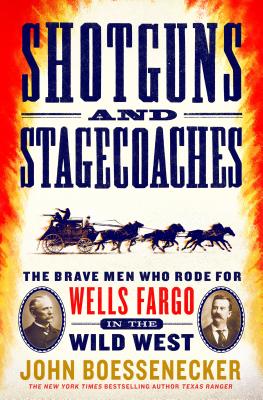
According to John Boessenecker, author of Shotguns and Stagecoaches: The Brave Men Who Rode for Wells Fargo in the Wild West, Andrew Jackson “Big Jack” Davis's 1870 train robbery “technique” was “used by train robbers for another fifty years”:
  1. Slip aboard a train as it leaves town
  2. Capture “the crew.”
  3. Uncouple “the engine, coal tender, and express car from the passenger coaches,” preventing armed “passengers . . . from interfering with the holdup.”
  4. Procede along the rails to meet “an accomplice” holding “saddle horses and pack mules.”
  5. Force the “express messenger” to surrender “gold coins.”
  6. Escape “into the night" (108)
     

Sunday, January 19, 2020

Chill Wills's Greatest Hollywood Role?

Copyright 2020 by Gary L. Pullman

Sometimes, the stories of the actors behind the figures of the Old West—at least, as they are portrayed in Hollywood Westerns—are as interesting as those of the cowboys, gunfighters, outlaws, and sheriffs themselves.

A case in point: character actor Chill Wills, who was known as much for his gravely voice and his gruff demeanor as he was for his rugged appearance. 

He starred in many Westerns, alongside some of the most famous leading men of the genre, including John Wayne, Clark Gable, Gary Cooper, Robert Taylor, Gene Autry, and Robert Preston.


It was after his role as Bee Keeper in the 1960 film The Alamo, starring John Wayne, that Wills got into trouble. Bee Keeper was the sidekick of Davy Crockett (John Wayne). According to Cynthia Brideson and Sara Brideson, authors of the highly recommended Also Starring Forty Biographical Essays on the Greatest Character Actors of Hollywood's Golden Era, 130-1965, Wills's role won him “his first Oscar nomination,” and he wanted the award badly enough to hire a publicity agent to conduct a campaign for him.
His agent, W. S. Wocjiechowicz, conceived the idea of blanketing “Hollywood trade papers” with an ad containing the copy, “We of The Alamo cast are praying harder—than the real Texans prayed for their lives in The Alamo—for Chill Wills to win the Oscar.”

Wayne, who had great respect for the real men of the West, was offended. Not only did he deny that “any of the cast had condoned” Wills's slick campaign, but he also “condemned” it.

The Academy of Motion Picture Arts and Science also found the campaign offensive. As a result, the Academy forbade any future such campaigns by stars who were nominated for the award.

Wills didn't win the Best Supporting Actor Oscar. Instead, he lost to Peter Ustinov, who won for his part as Lentulus Batiatus, the owner of the gladiator school in Spartacus.

https://books.google.com/books?id=WFE_DwAAQBAJ&pg=PA24&dq=chill+wills&hl=en&newbks=1&newbks_redir=0&sa=X&ved=2ahUKEwiSv5PHhJDnAhVXvZ4KHXnyDFQQ6AEwAHoECAYQAg#v=onepage&q=chill%20wills&f=false
Click picture to activate link.

Thursday, December 19, 2019

McLintock: Getting Wild in the Wild West

Copyright 2019 by Gary L. Pullman


To get a true idea of the complexity of the American West, as it is suggested by the posters that promote John Wayne's many Western films, it's necessary to analyze many of these advertisements. In this post, however, only one is considered, so, admittedly, only the surface has been scratched here.

The point of this post is to identify some of the elements that Hollywood filmmakers considered, at the time of the poster's appearance, to be of sufficient interest to the genre's fans that they could be used to persuade them to part with the price of the movie's admission.


McLintock, released in 1963, stars John Wayne, Maureen O'Hara, Patrick Wayne, Stefanie Powers, Jack Kruschen, Chill Wills, Jerry Van Dyke, and Yvonne De Carlo. Three women in a Western are two (or, in many cases, even three) more than usual; consequently, their presence suggests that this film focuses on the relationships between men and women of the Old West more than many other such films.

Despite the presence of Patrick Wayne, Jack Kruschen, Chill Wills, and Jerry Van Dyke, there's really only one male character of importance in the motion picture: Wayne's character, George Washington (“G. W.”) McLintock. As the movie's poster makes clear by focusing on him and O'Hara, the flick is primarily about his relationship to her.

Wayne is shown as huge, his portrait taking up the upper two-thirds of the poster's space. He appears to be laughing, except that he looks more pained than merry (but, then, Wayne often looks pained, on screen and in posters). The fact that the film is a comedy suggests that he is, in fact, laughing.

Beneath his image, the movie's title, “McLintock!,” appears, complete with exclamation point.

Beneath the title, three pictures, looking much like snapshots, are featured, the middle one of which slightly overlaps the one before and the one after it. Comprising a sort of triptych, these smaller images seem to be the soil, so to speak, out of which the comparatively gigantic head and shoulders of McLintock arises, as if his being is rooted in the activities the “snapshots” depict. The order of the smaller images also suggest a beginning, a middle, and an end, and all of them suggest violence of a sort.

The first picture shows two men engaged in a fistfight, while a third lies on the ground, apparently recovering from a blow.

The second shows a man pursuing a woman dressed only in her underwear; he holds part of her torn dress; she, the rest of it. One of the buildings behind the couple is the McLintock Hotel. Probably to maintain an element of suspense, neither of the two figures (or those of the fighting men) are identifiable as members of the cast and, in fact, look like any of the actors, so viewers can't tell whether the fighters include Wayne or the couple consists of him and O'Hara.

The third of the smaller pictures shows another brawl, in which one man, shown in the foreground, knocks his opponent down, while, in the background behind them, a third man holds a fourth, while a fifth falls to the ground. Most of the men, of course, wear six-shooters, holstered on their hips.

The poster seems to indicate that McLintock is a man of violence, a fighter and (by today's understanding) a perpetrator of domestic violence. A businessman, probably of some social and economic standing in town, he's outwardly respectful, but he's certainly no saint. Like his business rivals, physical combatants, and his own wife, others are subject to his will; a dominant personality he's able and willing to impose his will on men and women alike. Somehow (perhaps because the bigger image of him is laughing), he appears to be likable.

With some speculation, based on the poster's imagery, these notions are about all a viewer can discern concerning the movie's likely plot. Filmmakers were betting that these inferences would be enough to lure fans of Westerns in general and of Wayne in particular into theaters in 1963.

By consulting a summary of the movie, we can see whether the implications suggested by the movie's poster (or the interpretation of it, at least, that's offered in this post) are close to the content that the film actually delivers, are far afield, or are somewhere between these polar possibilities.


The movie, we find, is based “loosely” on William Shakespeare's comedy The Taming of the Shrew. G. W. is more financially successful than his name on the hotel, as shown on the poster, suggests, and he's not primarily a hotel owner; he's a rancher, a cattleman, and a mine operator as well.

His wife Katherine (O'Hara) has left him, to live back east, after suspecting he's committed adultery. His daughter Becky (Powers), a college student, lives with him. In Katherine's absence, G. W.'s hired a homesteader, the beautiful widow Louise Warren (De Carlo), whose adult son Devlin (“Dev”) (Wayne's son Patrick) lives in McLintock's house with her.


All is cleared up between G. W. and Kathleen, after G. W. spanks her with a coal scuttle, a technique he picked up from his daughter's fiance, Dev, who earlier delivered the same punishment to Becky, using the same instrument, whereupon the quarreling younger couple became engaged.

The poster is vague about the fistfights it depicts, but, it seems, they reference the brawls that occur in the movie. The man pursuing the woman in the central picture at the bottom of the poster is G. W.; the woman he pursues, his wife (although their identification is, perhaps intentionally, left unclear in the poster).

Wayne, who developed the script, included the spanking scenes to indicate his own aversion to domestic violence. However, according to O'Hara, Wayne “really spanked me! My bottom was black and blue for weeks!”

Although the poster seems purposely vague about the motives of the characters and the particular details of the situations in which they are depicted, again, probably to preserve suspense, it does a fair job of hinting at the nature of the film and its general theme.

Fans of the Western who enjoy action and adventure that includes sex (symbolized on the poster by O'Hara's half-dressed state) and violence (suggested on the poster by the pictures of fisticuffs) and features a manly, if familiar, star as protagonist were likely to fork over the price of admission to enjoy McLintock, the filmmakers apparently believed, since this poster was released to promote the film.

The persistence of these ubiquitous dramatic (and narrative) elements, which have become more and more explicit and pervasive in Westerns, as in other genres of film, suggests that today's audience remains at least as interested in these elements of the genre as was the same genre's audience in 1963.

Tuesday, December 17, 2019

What's in a Movie Poster? Western Images, Themes, Qualities, Characters, and Values

Copyright 2019 by Gary L. Pullman
 
Western movies tend to do well at the box office, especially when their leading character is a star of the magnitude of John Wayne or Clint Eastwood.

How much do posters and lobby cards designed to promote these films help sell tickets? The answer is anybody's guess, but, apparently, even in the digital age, Hollywood believes that there is magic in such advertisements. Movie posters and lobby cards have long been staples of the promotion of movies of all genres, Westerns included. They remain so today.

Like movie posters that promote other genres, those that advertise Western films can pinpoint some of the features of such fare that screenwriters have found appeal to viewers. The same features, one might suppose, would also appeal to readers of Western novels.

Let's take a look at a Western movie poster, with an eye toward what, specifically, they advertise that's central to this genre.


The poster for Pale Rider, featuring Clint Eastwood, shows

  • a lone gunman fanning his Colt
  • a lone gunman who is dressed well by the standards of his time
  • seven men standing in a line
  • a block of buildings typical of Western towns
  • a caption, in small letters, at the heart of the sun-like circle to the right of Eastwood's head
  • the colors yellow, orange, red-orange, and reddish-brown
What can we infer from the images, design, colors, and text?
 
Typically, the Western hero is a solitary figure who's good with a gun and who is willing to risk his life to defend himself, another person, or his own values. He tends to be larger than life. The poster focuses on Eastwood's character, a lone gunman who is shown as a giant among men; the seven other figures shown in the poster are not only literally beneath him, but they are tiny in comparison, and, while he is shown in full color, they are little more than shadows. Next to him, the other men are insignificant, more like pesky gnats than worthy foes.

Not only is the lone gunman bigger than anyone else, but he is also central: he is shown near the center of the poster's focus. Thanks to his size, his facial features are easily discernible; he has an identity; he is an individual, a person with character. His weathered appearance, leathery skin, and sharp features mark him as an independent, hard-bitten man who's been around and knows the score. In his eyes, we see steely determination; his bared teeth show aggression. He is focused, intent, one with his gun. A man on a mission, he stands and delivers. These are the qualities of personality, the poster suggests, that are important to the audience for this actor's films. Moviegoers (or readers) who enjoy Westerns want a man who, even alone, will take a stand, risk his own life, and combat forces which would defy or destroy the principles he holds dear.

The lone gunman dresses better than many of his day, which suggests that he enjoys financial success. He may make his living by his gun. He may, in other words, be a gunfighter or a mercenary. (Those familiar with the “spaghetti Westerns” in which Eastwood starred will know, of course, that, in Pale Rider, he plays a bounty hunter).

The sun behind him isn't a halo exactly, or, if it is, it doesn't fit him precisely, but the effect is similar; the concentric circles of the high desert sun frame him closely enough to suggest that there may be more to him than meets the eye, even if he himself is not altogether holy.

The poster's colors are bright and vibrant, but the sun's brilliant yellow, by degrees, merges with the brown of the hero's coat and the sky, the element of air merging with the element of earth. Perhaps the lone gunman is a demigod, the Wild West's version of Hercules. Western fans want their heroes to be Heroes, to be writ large, to be of nearly supernatural dimensions.

The fact that the movie is set in the West is presented almost as an afterthought. The stretch of low buildings with false fronts and the line of small figures in Western garb are more like quick sketches that suggest, rather than depict, the setting. It is clear that the film is not so much about the West itself as it is about this one individual, the lone gunman who stands out.

White adds touches of sunlight to the brim of the gunman's hat (which is not a Stetson; this man is a gunman, but he's no cowboy). White also highlights his left cheek, the top of his shirt, the cuffs of his shirt sleeves, and the handle and the cylinder of his second gun, the Colt stuffed in his gun belt, a phallus not quite hidden and ready to hand, doubling his manhood.


In the yellow circle of the sun, the poster's caption, in small letters, whispers part of a verse in the book of Revelations: “. . . and hell followed with him,” suggesting the consequences of the Pale Rider's visit and connecting him to a figure of the Biblical apocalypse: “And I looked, and behold a pale horse: and his name that sat on him was Death, and Hell followed with him.” If there was any doubt as to the lone gunman's identity, the caption spells it out: the Pale Rider is, in fact, Death personified.
 
Without seeing the movie itself, these suggestions are all the poster's viewer has by which to decide whether to see the film. According to Box Office Mojo, Pale Rider grossed over $41 million, a fourth of this amount during its opening. Although other factors contributed to the film's success, it seems that potential viewers liked what the poster showed them. If they were attracted by the themes, the type of hero, and the character traits suggested by this poster, it's likely that they would be drawn to similar themes, heroes, and character traits in Western novels as well.


Monday, December 2, 2019

Wild Bill Hickok's Wild Bear Story

Copyright 2019 by Gary L. Pullman


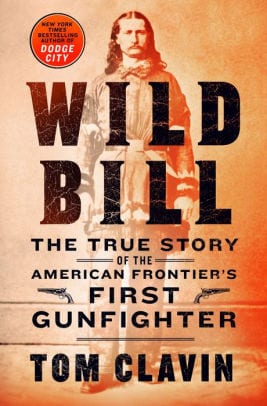
In Wild Bill, his biography of Wild Bill Hickok, Tom Clavin relates an anecdote about Hickok's alleged encounter with a cinnamon bear.


Wild Bill Hickok

According to Clavin, the story probably happened, although “a few researchers have disputed that the encounter” between Hickok and the bear “ever took place” (38).

It seems that the gunfighter was working as a teamster when “he found a bear blocking the road,” whereupon he climbed off his wagon “and shot her in the head.” The gunshot didn't do anything but anger the mother bear, causing her to attack, "crushing Hickok against her” (38).


He responded by shooting her in the paw, after which the bear locked onto his left arm and began to bite; Hickok jerked his Bowie knife from his belt and slashed "the bear's throat” (38).

Somehow, Hickok managed to drive his “freight wagon to the next town,” despite his extraordinary pain, and the local sawbones treated his patient “for broken bones in Hickok's chest, shoulder, and arm” (38).


Clavin mentions a film that features a bear attack: The Revenant, starring Leonardo DiCaprio (37). (Another movie, set in Canada, that features a horrific bear attack is Backcountry.)


Friday, November 22, 2019

Nineteenth-Century Guns: What's in a Name (Part 2)

Copyright 2019 by Gary L. Pullman

Several weapons that first appeared during the days of the American Wild West are named for famous people.


Richard Jordan Gatling

Richard J. Gatling (1818-1903), a medical doctor, invented the Gatling gun in 1861 and patented it a year later. He hoped that his spring-loaded, hand-cranked weapon (Handbook of the Gatling Gun, Caliber .30, Models of 1895, 1900, and 1903, Metallic Carriage And Casement Mount, 13), would lead to armies of fewer troops, thereby reducing wartime deaths and casualties (Harold A. Skaarup, Shelldrake: Canadian Artillery Museums and Gun Monuments, 133). It was an early rapid-fire weapon, preceded only by the French mitrailleuse (Skaarup, 133).


French mitrailleuse

Since the gun required the gunner to crank a handle to fire the weapon, it is not an automatic weapon; the first automatic wouldn't be invented until 1884, when the 7.92-millimeter Maxim machine gun, appeared. (Skaarup, 133).


Gatling gun

The Gatling gun, however, was superior to other weapons of its day, because the time that it took to eject a spent cartridge and load the next round of ammunition during “the firing/reloading sequence” allowed the barrel to cool a bit, permitting “higher rates of fire . . . without the barrel['s] overheating” (Skaarp, 133). (Today, the U. S. Army's .50-caliber machine gun fires so many bullets so quickly that the barrel must be replaced at frequent intervals.)

https://www.amazon.com/gp/product/B07THD35QX?ref_=series_rw_dp_labf

Bane Messenger, the protagonist of my Western series, An Adventure of the Old West, uses a Gatling gun twice in Blood Mountain, to even the odds against him.


1873 Winchester Rifle

The Model 1873 Winchester rifle was sold as “The Gun that Won the West,” although, technically, of course, a rifle is not a “gun,” since a rifle is rifled, whereas the bore of a gun is smooth. Originally, the rifle fired a .44-40 centerfire cartridge. The bullet could travel at a velocity of about 1,500 feet-per-second. The rifle also featured “a sliding breech cover . . . that [kept] dirt and snow out of the breech,” and “an integrated safety sear . . . prevented accidental discharge of the rifle when the hammer was cocked” (Martin Pegler, Winchester Lever-Action Rifles).


Buffalo Bill Cody's 1873 Winchester rifle

Various lengths of barrels were available, as were a number of embellishments: “silver or gold plating, engraving, set triggers and special carrying cases” and “an all-in-one reloading tool” (Pegler).

The standard version of the rifle cost $27 ($439 today), the carbine $24 ($390 today), but “these prices were often doubled by the time the guns had shipped west” (Pegler).


Oliver Fisher Winchester

Oliver Winchester and his family became fabulously wealthy. His son, William Wirt Winchester, served as the treasurer of the Winchester Repeating Arms Company. After his demise, William's widow Sarah became convinced that their house was haunted. The ghosts of Native Americans and others who'd been killed by her family's rifle, she believed, were out for revenge. 

To protect herself, psychics told her, she had to continue to add on to the eight-room farmhouse she'd purchased in San Jose, California, after leaving her home in New Haven, Connecticut. The work had to continue non-stop, twenty-four hours a day, year after year—and it did, to the tune of $5 million ($71 million today), until her own death in 1922.


Sarah Winchester

To confuse the spirits, the 24,000-square-foot mansion (as it came to be) incorporated some decidedly strange features. For example, only one bathroom has a “working toilet”; the others were constructed to confuse the ghosts (Gia Lui, “Take a Tour of San Jose's Winchester Mystery House”).


Winchester Mystery House

List o f 19th-Century U. S. Western Frontier Forts, Part VIII: Montana

Note : This is the eighth of a series of lists of the  U. S. forts of the Wild West. It is intended for use in research by writers, readers,...